
Devastated by freeze, a Colorado fruit farm is forced to move on- The Colorado Sun

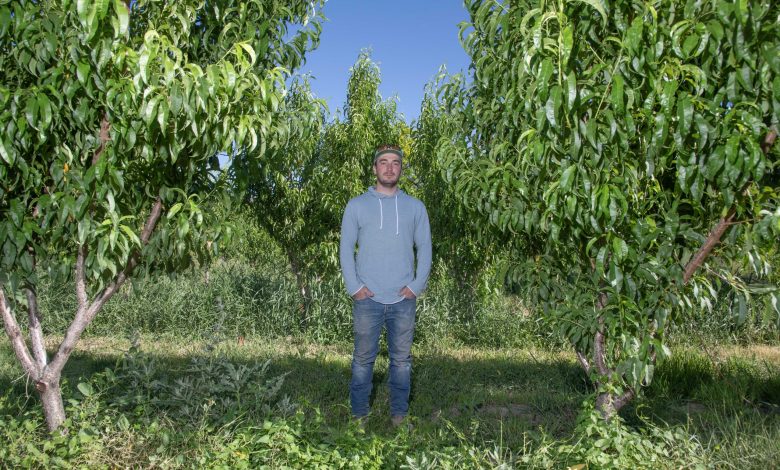
In one sense, Kevin Kropp’s fruit trees are doing everything they’re supposed to this summer.
Their leaves are green and healthy. Sprinklers hum and workers fertilize and spray for disease. Bees and butterflies flit among the branches.
What the trees aren’t doing, however, is growing fruit.
Across the 140 acres Kropp farms with his brother, Kris, near Paonia, not a single cherry, plum, peach, nectarine, pear, apricot or apple will be harvested this year. A devastating freeze in April wiped out every crop that the Kropps’ business, First Fruits, grows.
In his nearly 50 years growing fruit, Kropp has never experienced anything like it.
“It’s strange to go out and see trees with nothing on them when normally we’re evaluating and watching things grow,” he said. “To see the trees completely devoid of fruit really makes you take a step back for a moment.”
First Fruits is far from alone.
An overnight freeze April 17 decimated fruit production across Colorado’s North Fork Valley, where most growers have reported a total loss of their crops. While the region produces only a fraction — estimated at 10% — of Colorado’s total fruit harvest, it is home to many of the state’s organic orchards and supplies farmers markets, wholesalers and retailers, as well as community-supported agriculture programs across the Western Slope and Front Range.


Empty fruit baskets and an empty storage shed operated by First Fruits. (William Woody, Special to The Colorado Sun)
Yet while the fruit may be gone, the business of fruit farming continues. Orchards still must be irrigated, fertilized and maintained. Year-round employees still need paychecks. Relationships with farmers markets, wholesale buyers and CSA members must be preserved. The effects of the freeze have rippled far beyond the orchards themselves, affecting seasonal farmworkers, packing sheds and businesses that depend on a harvest that will never come.
Now, growers across the valley are confronting a difficult question: How do you survive a year without the crop that normally pays the bills?
An “act of God”
For weeks after temperatures plunged into the low 20s on the night of April 17, growers waited to see whether the damage was truly as bad as it appeared. Nobody wanted to make decisions too quickly, said Regan Choi, co-manager of Ela Family Farms in Hotchkiss.
“The first month or month and a half was a period of being in shock and waiting to see if it was really as bad as it looked like it was,” she said. “But after that month, it was pretty obvious that everything was dead.”
The timing of the freeze made it especially devastating. An unusually warm spring had pushed many fruit crops well beyond bloom and into the fruitlet stage, when young fruit is particularly vulnerable to cold temperatures.
At First Fruits, sweet cherries were nearing the size of a dime and apricots were approaching the size of a quarter when temperatures dropped.
“That morning when we sampled some of the cherries they were like popsicles — frozen all the way through,” Kropp said.
As growers surveyed the damage, it became clear there would be no meaningful harvest in the North Fork Valley this year. The realization triggered a cascade of difficult decisions. At First Fruits, Kropp’s seasonal workforce arrived the very morning growers discovered the extent of the damage.
“We had contracted our H-2A visa worker program to come in and strangely they came in on that very day,” Kropp said. “They showed up the very morning that we saw what was happening.”
The workers, many of whom had returned to the orchard year after year for more than a decade, were as devastated as the Kropp family.
“These are guys we’ve had for 15 to 20 years, coming back year after year,” Kropp said. “They plan on that employment all year long.”
First Fruits was able to keep some workers temporarily and eventually found jobs for several through the Department of Labor, but others had to seek work elsewhere.
At Ela Family Farms, Choi faced a different version of the same problem. Her H-2A workers were scheduled to arrive about a week after the freeze. Because the crop had already been lost, the farm was able to invoke an “act of God” clause and cancel the contract before workers traveled to Colorado. The decision saved the farm thousands of dollars in transportation, housing and wage obligations. But Choi said it still felt wrong.
“These are people we work with year after year,” she said. “We care about them. We take them out to Fourth of July fireworks, we take field trips to go paddleboarding or go see snow, and they’re counting on this income for their family for the year. It’s gut wrenching.”
The consequences on employment extended far beyond individual orchards. At Rogers Mesa Produce, the Paonia packing shed that sorts and distributes fruit from growers across the valley, seven of the company’s eight growers lost their crops.


Workers size, sort and package fresh apricots for market at the Rogers Mesa Fruit Packing shed near Hotchkiss on June 11. (William Woody, Special to The Colorado Sun)
“Out of all of our growers, only one didn’t completely freeze out,” produce sales manager Annavah Hotchkiss said.
In a typical year, the operation employs 50 to 60 seasonal workers in addition to six full-time staff. The freeze “drastically affected our workforce,” Hotchkiss said.
A tendril of good luck for the packing shed is that one of its growers, the aptly named Fortunate Fruit, didn’t lose its crop this year. That’s because the family-owned and operated 84-acre orchard isn’t in the North Fork Valley, but rather grows its apricots, peaches, nectarines, and plums within the warm red walls of the Dominguez Escalante Canyon. Fortunate Fruit’s harvest will allow Rogers Mesa to bring back handfuls of workers as the crops come in.
“It’s hard in a year like this,” Hotchkiss said. “A packing house or packing shed, there’s no insurance to cover a loss like this.”
The situation also had Rogers Mesa staff scratching their heads over how to make up for the lost income.
“In the beginning when we thought there would be no fruit at all we were brainstorming everything,” Hotchkiss said. “Were we going to start holding events here? Renting out cold storage? Thankfully we’ll have the little fruit to sustain us, and our owner is going through some other options. We obviously won’t break even this year.”
Finding another way to make a living
For businesses built entirely around fresh fruit, there are few ways to replace a lost harvest. Packing sheds can’t pack fruit that doesn’t exist. Farmers who rely on wholesale sales have little to sell. Unlike vegetable farmers, orchardists cannot plow in a bad crop and replant. Their expenses remain whether fruit grows or not.
“It’s the fixed-cost paradox,” said Patrick Dunstone, executive director of One Delta County: An Economic Alliance. Growers still have to irrigate, fertilize, prune and care for their orchards, but they have no crop to generate revenue.
Crop insurance helps cushion the blow, but only partially. Most policies cover roughly 30% of expected losses, Dunstone said — enough to help farms survive, but rarely enough to make them financially whole. At the same time, many growers are also grappling with ongoing drought and increased pest pressure, adding yet another layer of financial strain.
Some businesses, however, have been able to lean on income streams that extend beyond fresh fruit. Jeff Schwartz built Big B’s Delicious Orchards with that uncertainty in mind decades ago.
“The scale of really economically sustainable and profitable farming is so big and the risk is so great that I was never really interested in being a large-scale farmer,” Schwartz said. “We really started out more of a value-added manufacturing company — a brand — rather than a straight orchard.”

Today, the orchard’s restaurant, country store and outdoor music venue bustle with visitors, even though there isn’t any fruit to pick on the trees in the U-pick orchards. The company’s largest business — pressing millions of pounds of apples into juice and cider each year — will continue, although with more fruit trucked in from Washington state to replace what normally comes from the North Fork Valley.
“We’ll feel that impact,” Schwartz said. “The quality of the apples (from out of state) is not the same, so we’ll notice that a little bit. Where we’ll really feel it is in the U-pick, the agritourism part of the business.”

To see the trees completely devoid of fruit really makes you take a step back for a moment.
— Kevin Kropp, First Fruits

Growers who don’t have such a diversified business have had to take a different approach. Without fruit to harvest, First Fruits has shifted workers toward projects that rarely fit into a normal season — “things that are time consuming, like installing irrigation, that you can’t squeeze in during busy times of harvest,” Kropp said.
Without fruit, Ela Family Farms has had to redesign its summer schedule. Instead of being at seven Front Range and Western Slope farmers markets simultaneously every weekend, they’ve created a rotating schedule to be at a few markets per month. Instead of fresh peaches and cherries, they’re bringing artisanal products like jam and dried fruit, along with rhubarb in the spring and heirloom tomatoes later this summer.
Meanwhile, work on the orchard continues.
“We have 36,000 trees on the property — you can’t just ignore those,” Choi said. “They still need to be pruned and watered. … It would be like ignoring a child for a year and hoping it was still good — see ya in a year, good luck!”
For all of the farmers, this year has become less about making money than making sure they’re still in business when the next crop arrives — and preserving the relationships with the people who buy it.
The loss reaches the Front Range
The effects of the freeze extend far beyond Delta County. For decades, North Fork Valley growers have been among the cornerstone fruit vendors at the Boulder County Farmers Market, where shoppers have come to expect peaches, cherries and apples from farms like First Fruits and Ela Family Farms every summer.
“While most people think of Western Slope fruit coming from Palisade, we’ve typically had more growers from Paonia and Hotchkiss at our farmers markets,” said Frankie Ryder, the market’s director of marketing and development.
In a typical season, three of the market’s five fruit vendors come from the North Fork Valley. First Fruits has sold at the market since the 1990s.

This story first appeared in Colorado Sunday, a premium newsletter for members. Experience the news at a slower pace, with thoughtful articles, unique adventures and a reading list that’s perfect for Sunday morning.
“It’s hard to convey just how much fruit farmers are the heart of the farmers markets in the summer,” Ryder said.
This year, the market has brought in additional growers from Palisade to help fill the gap, while Ela Family Farms will step in occasionally to sell jams and dried fruit made from previous harvests. Nevertheless, some things can’t be replaced.
“Going a whole season without watching a child bite into a bubblegum plum or nibble on an apple as they walk through the market will feel surreal,” Ryder said.
Those individual stories reflect a much larger economic shock.
One Delta County estimates the April freeze caused roughly $15 million in direct agricultural losses across the North Fork Valley, disrupting not only orchard revenue but also packing operations, wholesale supply chains and businesses that depend on seasonal tourism.
Nevertheless, communities are already adapting. Festivals including Paonia Cherry Days and Cedaredge Applefest are shifting some programming away from agriculture and toward community events and arts programming in an effort to sustain tourism despite the failed harvest.
Delta and 32 other Colorado counties in April were declared natural disaster areas because of drought, making growers eligible for USDA emergency loans and other disaster assistance programs. Local nonprofit organizations have also begun helping farms navigate financial planning, legal issues and other recovery efforts.
Even with that assistance, growers say recovery won’t happen this season. The trees still need to be irrigated, pruned and cared for. The hope is simply that next spring brings a crop worth harvesting.
“We hope it’s a once in a lifetime deal and not a lifetime thing,” Kropp said. “But that’s agriculture, it certainly has challenges.”