
‘House of the Dragon’ Episode 4: The Forgotten Targaryens Come Into the Spotlight


George R.R. Martin himself has compared the dragons of A Song of Ice and Fire to nuclear weapons. “They are the most devastating weapon,” he said in 2022. “They cause great destruction, massive loss of life.”
But the comparison is only partially apt. Dragons are like nuclear weapons, if each nuke were under the purview of one and only one person. And if the person controlling the nuke had only partial control—the bomb actually has a mind of its own and sometimes disobeys its master. These are scary, scary weapons.
We’re firmly in the proliferation era of Westerosi history. At the conclusion of Episode 4 of House of the Dragon, there are 10 dragons of fighting size in the war On the side of Rhaenyra:
- Rhaenyra Targaryen’s own Syrax
- Daemon Targaryen’s Caraxes
- Baela Targaryen’s Moondancer
- Addam of Hull’s Seasmoke
- Hugh the Hammer’s Vermithor
- Ulf the White’s Silverwing
And on the greens:
- Aemond Targaryen’s Vhagar
- Helaena Targaryen’s Dreamfyre
- Daeron Targaryen’s Tessarion
And finally, one dragon and rider who in this episode prove to be somewhat in limbo:
- Rhaena Targaryen’s Sheepstealer
I’ve sorted these lists in order of each rider’s approximate loyalty to their respective side. Rhaenyra, Daemon, and Baela are all family (in too many ways to count). Addam is also family, although not officially recognized as a Velaryon, as his father wishes. Hugh and Ulf are Targaryen bastards of relatively unknown parentage, and Rhaenyra and Daemon have made it clear that they’ll almost certainly not officially make the family tree. (Ulf suggesting he style himself “Targaryen” last episode prompted Rhaenyra to give such a look of disgust that you’d think she was witnessing Samwell Tarly perform surgery on greyscale.)
Aemond is firmly on the side of the greens (although not necessarily on the side of his brother Aegon). As is Helaena, although she’s really on this list only for the sake of completeness—she made it clear last season that she has no desire to ride Dreamfyre into battle. Daeron is, then, theoretically, the next best asset the greens have … only Ormund is now out in the open with his plan to make Daeron king.
And then there is Rhaena, which is a whole other mess.
Much has been said in this series about how difficult it is to control a dragon. King Viserys famously said that the Targaryens’ control over these winged beasts was an “illusion.” Yet it may be equally difficult to control a dragonrider. This episode sees each respective side looking to hold on to that control, so it seems like an apt time to go through two of the newest dragonriders to the series: Daeron and Rhaena. These two Targaryens have been in the shadows for much of the series but now are starting to emerge as major players. Let’s take a look at their backstories, current standings, and motivations.
Daeron Targaryen
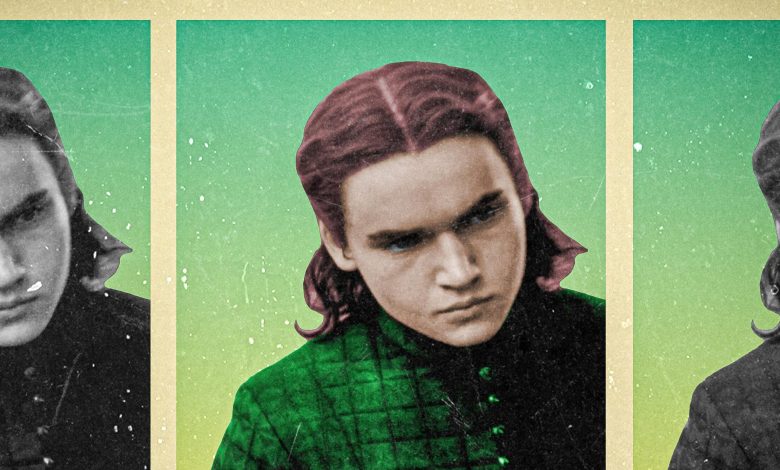
Finally, we get our first look at Alicent’s youngest son in this episode. And now we know why both the Hightowers and the show itself have been hiding him: He has auburn hair.
This is a change to the story. Daeron is silver haired in Fire & Blood, and while the show has already been pretty aggressive in changing appearances this is a pretty big one. The auburn hair explains why the boy was sent to Oldtown at such a young age that Rhaenyra and Daemon had never even met him. While Alicent says in this episode that she wanted one of her sons to be raised a Hightower, I’d also wager that Otto and Co. wanted to get Daeron out of sight as soon as they saw his dark locks—the greens already knew that part of their claim to the throne would rest on Rhaenyra’s children being illegitimate, an idea that was largely staked on their dark hair. Having one of their own with dark hair would muddy that narrative. So they made him disappear.
Sending a child to another noble house as a ward is a common practice in Westeros. For example, both Ned Stark and Robert Baratheon were sent as boys to be fostered by Jon Arryn in the Eyrie, where the two became close friends. In this series, Rhaena is supposed to be a ward of Jeyne Arryn, while Rhaenyra’s two children with Daemon, Aegon and Viserys, are heading to Pentos to be wards there.
But this arrangement, while common for noble children (especially non-firstborn sons who want to train to be knights), would be highly irregular for an infant. The only examples of infant wards are children who were essentially hostages. Daeron isn’t a hostage of the Hightowers, so it does strain credibility a bit that Alicent and King Viserys would send him away at such a young age. And are we to believe that he never once returned to King’s Landing to visit his mother and father, especially with the latter in poor health? Or that word of his appearance never once broke containment in 16-ish years? The plot demands this change to set up Ormund’s Episode 3 ruse, but it does require the audience to suspend some disbelief.
In the books, Daeron isn’t sent away as an infant, and he spends considerable time in King’s Landing. He’s born right around the same time as Jacaerys. Viserys, sensing the animosity building between his second wife and his first daughter, ordered that Daeron and Jacaerys share a wet nurse in the hopes that the two being “milk brothers” would also lead to them becoming friends. That didn’t work—they share a rivalry like what we see between the other boys in Season 1 of House of the Dragon.
Still, Daeron isn’t a selfish libertine like Aegon or an endlessly ambitious monster like Aemond. Fire & Blood tells us that Daeron was the “gentlest” of Alicent’s sons and that he was “as clever as he was courteous.” He’s also described, at one point, as “soft-spoken.”
Those character traits certainly came through in this episode, so the show hasn’t thrown out everything we know about Prince Daeron. But he’s also learning some awful lessons from Ormund, whom we also learn more about in this episode.
As discussed last week, Alicent’s cousin is the show’s latest antagonist, filling a hole created by the departure of Aegon, the injury to Aemond, and the death of Otto. But he’s not well fleshed out in Fire & Blood. In this episode, we get more insight into him. First, he’s a religious fanatic—his opposition to Rhaenyra isn’t just about supporting his family. He’s opposed to Targaryen rule in totality, calling the Targaryens “a savage race” and going so far as to tell Daeron himself that he has “a taint in his blood.”
Ormund clearly has some mixed feelings about Daeron and his dragon. When he catches Daeron sharing a tender moment with Tessarion, he tells him, “I have warned you against indulging in affection for that beast.” It seems that to Ormund, the dragons are a means to an end—he despises them but also needs Daeron’s (and Aemond’s and any others he can get) to win the war against Rhaenyra. He tells Daeron that the Hightowers are “superior men” and that Daeron becoming king would fulfill a “divine purpose.” He then all but forces Daeron to kill one of Tumbleton’s smallfolk as a show of “justice.”
So Ormund embodies a mix of religious fanaticism, racial supremacy, political ambition, and … sensitivity to odors? Strange, scary man.
In revealing his idea to make Daeron king, Ormund tells the boy, “I have risked much and more to raise you up. Surely you do not wish to disappoint me?” We can see in this episode that Daeron carries some trauma with him. When Ormund gets a scroll with some bad news, Daeron knows that an epic and violent meltdown is coming. As Alicent reveals, Ormund is essentially the only parental figure Daeron has ever known. She says that Ormund is “fatherly, I’m told.”
Well, A Song of Ice and Fire hasn’t exactly been a model for healthy father-son relationships, and this one is no different. Ormund wants Daeron to turn against his brothers and become king himself. He’s shown in this episode that he has quite a bit of control over his foster son, but time will tell whether his scheme is successful.
Rhaena Targaryen
I already discussed after Episode 1 how Rhaena’s plotline represents a massive change from the book. In Fire & Blood, a common girl named Nettles claims Sheepstealer. Nettles’s existence provides thematic importance because she has no known Valyrian ancestry, so she’s a blow to Targaryen exceptionalism. But Ryan Condal cut Nettles and gave the role to Rhaena to make the show a bit more family focused. Here he is explaining the change to IGN:
It just felt to us that because again, this story is told in point of view, that it felt more apt as this is a family story to where we had the opportunity to involve one of the family members in the storyline. And because Rhaena has been set up since Season 1 as the member of this family who doesn’t have a dragon and basically her sole identity is the Targaryen kid who doesn’t have a dragon, it felt like that was a character that we had already set this long runway for that it could be very satisfying for the TV audience that didn’t have an experience with the book at all to see that character claim a dragon and then in a very, I think, Game of Thrones and Westerosian kind of way, to reap the consequences of having her wish come true. It’s a very monkey’s paw kind of moment for Rhaena. She gets her great wish and it becomes her greatest nightmare.
Now that we’re getting further along in the story, I can reveal a bit more about Nettles without going into spoiler territory. In Fire & Blood, Daemon and Nettles end up with a close relationship. The exact nature of this relationship is unclear—one rumor has it that it’s romantic in nature (and since Nettles is a teenager and Daemon is in his 50s, ew), while another suggests that Nettles is secretly Daemon’s bastard daughter (which would undermine the whole point of her not being Valyrian, but I digress). Either way, Nettles helps create another rift between Daemon and Rhaenyra.
We’re now seeing how House of the Dragon is creating that rift with Rhaena in the role. Since Rhaenyra blames Sheepstealer for Jacaerys’s death (another change from the book), Daemon is now caught in the middle between his wife and his daughter. He pleads with Rhaena to just come to King’s Landing, where they can explain to Rhaenyra that it was all a mistake. I think that Daemon’s instincts are pretty good here—Rhaenyra has shown a remarkable capacity for forgiveness in this series, based on how she’s treating Alicent (this stands in contrast to book Rhaenyra, who isn’t nearly as magnanimous). But Rhaena refuses. She says she can’t stand before Rhaenyra, can never return, and must remain in exile.
“You ask me to deceive her. That is betrayal,” Daemon says. Rhaena responds that she’s never asked Daemon for anything and elaborates that she’s always felt neglected because she doesn’t have a dragon. Now that she finally has one, is her plan to live in a cave in the Vale forever? That seems unlikely.
In the next scene, Daemon does deceive Rhaenyra, delivering her the head of … someone … who he says was Sheepstealer’s rider. He says that the dragon has fled and will no longer be a problem. He can’t keep this deception up forever. His explanation to Rhaenyra is weak, and besides, Rhaena is supposed to be with Rhaenyra and Daemon’s two youngest sons in Pentos. Eventually, Rhaenyra will learn that she isn’t. And there are already characters who are on to Daemon. “Whose head is that?” Mysaria asks cryptically as the two leave the small council chambers.
I don’t know where the show is going with Rhaena. In the book, she remains in the Vale for the entirety of this war. She doesn’t live in a cave, but with Lady Jeyne Arryn while she prays day and night for one of her dragon eggs to hatch. In fact, Rhaena has only a handful of mentions throughout the Dance of the Dragons portion of Fire & Blood. Her lines in this episode about being an afterthought feel almost like a commentary on the book, where she is largely out of sight and out of mind. The same is not true for the showrunners. They’ve given her a large role, and this episode makes it clear that she’ll be an important player going forward.

Riley McAtee
Riley McAtee is a senior editor at The Ringer who focuses on America’s two biggest sports: the NFL and ‘Survivor.’