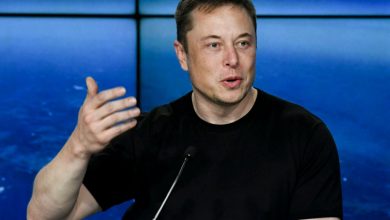


At its debut, individual investors — meaning laypeople instead of institutional investors such as hedge funds or asset managers — were allocated between 20 and 25 percent of SpaceX stock. The illusion of distributed ownership begins to fade when compared with Musk’s 42 percent, resulting in 80 to 85 percent voting rights. Ownership does not equal control. Like Meta, Alphabet, and Palantir, SpaceX went public offering different classes of stocks. Each class has different voting rights, preserving control in the hands of founders and CEOs. Musk’s shares have ten times more voting power.
Concretely, even if Bernie’s proposal succeeds, Musk would still retain the control over what SpaceX does and how it operates. For one thing, it would be unlikely for the AI sovereign wealth fund to block SpaceX from building extraterritorial data centers, regardless of their environmental impact. Likewise, the public will have zero bargaining power to prevent a company like OpenAI from selling its advanced models to the military; deter Palantir from working side by side with Immigration and Customs Enforcement and, again, the military; or convincing Anthropic to stop developing models that could induce a cybersecurity catastrophe.
Society cannot trust the willingness of a few CEOs and founders to halt the development of AI that can be used as an autonomous weapon, as a tool to expand control in the workplace, or as a school assistant that spoon-feeds students and does their homework. By themselves, these people will never slow the pace at which their own companies develop technology and expand scale. Scaling up — concentrating more data to train ever larger models in massive data centers with greater numbers of processors — is strategic for cloud giants and AI companies. It is an exclusionary system by design that ensures their lead.
Scale enables control without ownership across the networks of organizations described above. Thousands of actors integrate innovation systems dictated by a few tech giants. Following the latter’s research and development and business priorities, these ecosystems also contribute to developing technologies that reinforce military and workplace control, exacerbate disinformation, and undermine people’s capacity to think. These are not inevitable or accidental outcomes. Big Tech companies plan science and technology aiming to produce AI that renders users dependent, and that advances the corporate and political interests of those with the money to afford it.
Another AI agenda cannot wait. To prioritize communities and the planet, the public must be in control. International democratic control over the AI ecosystem is at least as urgent as redistributing its benefits. It would require creating public institutions that are both independent from corporate power and autonomous from the whims of individual governments.
An AI sovereign wealth fund could thus only be celebrated as part of a broader international strategy. As a stand-alone initiative, it risks backfiring. Just as sovereign oil funds can dampen popular enthusiasm for a renewable energy transition, a sovereign AI fund could bolster the adoption of today’s AI, the world’s largest control technology. A just society is not only one in which wealth is redistributed. Control, thus decision-making power, and knowledge should be equally shared.