This article discusses plot details of The Vampire Lestat and it’s latest episode, “Montreal.”
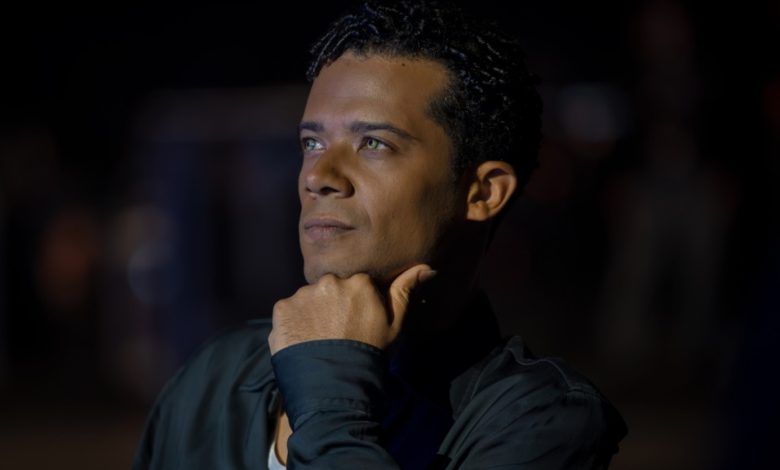
For two seasons of Interview With The Vampire, Jacob Anderson’s stirring performance as Louis de Pointe du Lac grounded the gothic horror drama. In the ongoing third season—rebranded as The Vampire Lestat—Anderson’s on-screen presence has been comparatively limited; this time around, the story is being told from the POV of Louis’ toxic lover, Lestat de Lioncourt (Sam Reid). However, their captivating and over-a-century-long romance gets a much-needed spotlight and introspection in TVL‘s penultimate hour.
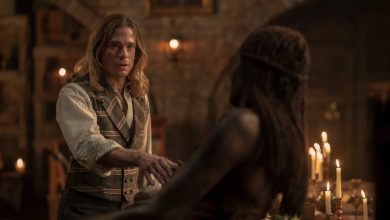
In “Montreal,” Louis reckons with his undying feelings for Lestat and the guilt he holds for getting his pseudo-daughter, Claudia (Delainey Hayles), killed. It’s a roller-coaster of an hour chronicling an emotionally turbulent night in the afterlife of the two vamps—and it ends with their heads literally rolling on the floor. Even in its campy rock ’n’ roll era, The Vampire Lestat puts its leads through the wringer. The A.V. Club spoke to Anderson about preparing to confront Louis’ latest problems, playing a whole new version of him in season three, and how the show has helped him evolve as an actor over the years.
This interview has been edited for clarity and length.
The A.V. Club: We need to start with that heartbreaking seance with the real Claudia in episode six. How did you figure out how to portray Louis’ reaction to everything she was angrily confessing to him?
Jacob Anderson: For a lot of that big scene, Sam and I were trying to figure out how to react, because we had quite a strong reaction while seeing Sarah and Delainey just rehearse the scene. It took us by surprise to see it actually happening in front of us. I won’t speak for Sam, but for me, it changed how I thought Louis would respond to Claudia in that moment, bearing in mind that Louis has just spent a certain amount of time with somebody who looks a lot like Claudia. The confirmation of her presence and for her to actually be there is really overwhelming. There’s a part of him that just wants to reach out and touch her, but then there’s also a part of him that is just, as he says in the episode, he doesn’t like witches or that kind of magic. He grew up in New Orleans and is familiar with it, so there’s some distrust. It’s complicated, isn’t it?
There are a number of ways to respond to something like that, and I tried to put all of those responses into different moments. What I really love about it is the aftermath of the scene because Claudia is really being herself. There’s no subjectivity to it. We’re hearing it from Lestat’s recollection, I guess, but still. I think the thing that brings Louis and Lestat together is realizing that [Claudia] is enduring. She’s on the other side, but she’s still the Claudia that they remembered. So there’s a really beautiful moment of acceptance from both of them that comes out of it, and it’s also an acceptance of Claudia in her multitudes.
AVC: How did your observation of the rehearsal change how you viewed or wanted to depict Louis’ response to the seance?
JA: I saw it as more of a harrowing experience for Louis when I read it, especially because Claudia’s feelings about Louis are not the most complimentary. They’d be pretty difficult things to hear about yourself. But there was something so magnificent about it. Yeah, magnificent is the word coming to my mind right now, about the way that Delainey and Sarah were playing it. I knew I had to lean into that acceptance mode of, “Okay, that’s still my Claudia.”
AVC: The episode begins with Louis and Lestat in what feels like a rom-com. They haven’t been like that in so long, which was lovely to see. Did it feel that way for you and Sam Reid as well? Do you guys go in and out of Louis and Lestat’s many modes seamlessly at this point?
JA: There’s a familiarity to it that is always present whenever Louis and Lestat are together. Louis’ recollection of their early relationship was so tainted by everything that happened after it that I think he maybe didn’t find it quite as easy to access the lighter side of him, so it’s fun to play that now and to have a relationship where they both are at ease with each other in a way that they aren’t with anybody else. Sam and I have a pretty symbiotic, shared language. We don’t really talk about it that much or talk about how we’re going to play our scenes. We just try to surprise each other, which is part of the fun for us.
AVC: For a lot of this season, Louis’ presence is defined by his expressions, whether it’s the concert in episode two or the scenes with Regina. Do you feel in sync with him three seasons in? How do you internalize his feelings so you can bring them out, even if he doesn’t have a lot of dialogue?
JA: I’m definitely in sync with Louis on some level, but I’m always conscious of how it’s my job to tell a story when there are many ways to tell it. That’s the case in every department. Even if you think about the camera and how it moves around the subject, that’s telling a story, too. The [expressiveness] is also something I learned by working on a previous show for nearly seven years, where I didn’t have a lot to say, and the time when I spoke, it was in a made-up language. So you really have to learn to articulate what a character is going through without being the loudest voice in the room. It’s just something I always try to remember. There are many different tools for actors, and I just pick the ones that feel most appropriate for the moment. I like those details. It’s fun.
AVC: And are you the type of actor who brings real life experiences into your performance, or do you like relying on the script and, in this case, Anne Rice’s source material?
JA: It’s a combination of things for me. I don’t know what it’s like for other actors or what anyone else’s process is. But I think even if you’re playing something that is so out of the realm of what would ever be possible, I can’t help but connect it to something in my life. It’s almost like muscle memory. I’m not sure because I didn’t formally train, so I don’t know all the terminology, but that’s just how I work. I like to use things that are familiar to me. Sometimes you end up bringing some of how your day is going or what you’re feeling that day. That’s why I don’t like to overplan or over-rehearse what I’m going to do. I much prefer to be more instinctive and pay attention to what the other person is doing. My favorite type of acting is when people are good listeners as much as they are good speakers.
AVC: Since this is a show that allows you to reinvent your character continuously, do you think it has helped you evolve as an actor in unexpected ways? How does that factor into season three?
JA: One hundred percent. I’ve had so many opportunities through Louis to just try things. That’s the biggest privilege that I’ve had on this show. Sometimes you do your whole set and the days sort of disappear when you look back. You have bad days, too, because those first two seasons, I was on set every day. So you can have a bad day with the knowledge that the next day will be better. Or there were times where I’ve tried things and fallen on my face, and you’ll never see those things. [Laughs]. Or then you do see them, and maybe they end up as interesting or surprising takes to you. But it means this show has given me a level of confidence I can bring into other parts of my life.
I love Tom Hanks’ three rules of acting: being on time and learning your lines. And the third is to have an idea. That never really fails anyone. With Interview, you get to play somebody through centuries, and there are a lot of opportunities that come with that. In season three, I play a version of Louis that’s unfamiliar to me as well because I was playing him through how Lestat sees him rather than how Louis sees himself. It was a different type of challenge, which I loved.
Saloni Gajjar is The A.V. Club‘s TV critic.