
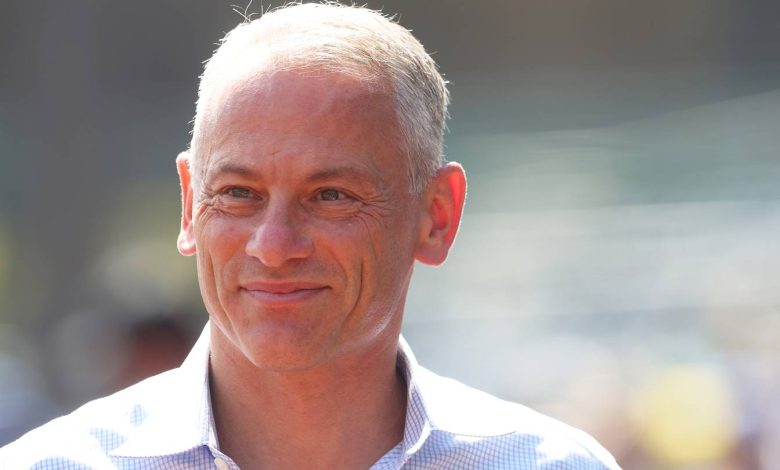
Despite inconsistent results at the big-league level in recent years, the Cubs have been fairly successful when it comes to drafting under Jed Hoyer (and VP of Scouting Dan Kantrovitz). Hoyer’s front office has more or less nailed their early picks in every year since 2022, when they drafted Cade Horton in the top ten. Horton began a series of first-rounders who have immediately shot up prospect boards in the months following their draft.
Since drafting Horton, Kantrovitz and Hoyer have gone to the group of players they’re most comfortable with in the first round, focusing on college hitters like Matt Shaw and Cam Smith. Those picks have gone over quite well, and it was no surprise when mock drafts in the run-up to the draft suggested that Chicago was likely to go back to the college hitter well in the first round this year. That ultimately proved to be incorrect, but how did the Cubs do overall on Day 1 of the 2026 draft?
Round 1: RHP Cade Townsend (A)
Instead of going to the tried-and-true well of college hitters in the first round, the Cubs opted to call back to their 2022 draft with another unexpected first-round pick named Cade. Like Horton before him, right-hander Cade Townsend’s college stats don’t instantly jump off the page. Horton had a 4.86 ERA in 53 2/3 collegiate innings before joining the Cubs, while Townsend has a 4.78 ERA across his two years with Ole Miss.
Just as those stats undersold Horton’s status as a potential impact hitter, Cubs fans shouldn’t let Townsend’s numbers fool them. He’s struck out 31.9% of his opponents in the SEC this year, and Eric Longenhagen of Fangraphs ranked Townsend 18th overall (and fifth among pitchers) on his draft prospect rankings. Longenhagen describes Townsend as a low-risk prospect with “big stuff.” He can touch 98 with his fastball, has two plus breaking balls, and might develop a solid splitter as well.
What really makes the Townsend pick stand out, however, is that the righty’s impressive talent is paired with a real opportunity to get to the majors in a hurry. The Cubs need pitching ASAP, and so it should excite Cubs fans that Longenhagen describes Townsend as a candidate to move quickly and “help in some capacity” at the big league level sooner rather than later. It’s hard to imagine Chicago landing a better fit with their first pick, though they came close to an even bigger prize.
Round 2: OF Caden Sorrell (B+)
While the Townsend pick saw Hoyer’s front office demonstrate some restraint on the college hitter front, no one should have expected them to stay away from their bread and butter for long. That’s why it should come as no surprise that the Cubs’ second pick in this year’s draft saw them pluck Texas A&M outfielder Caden Sorrell from the board.
Sorrell has absolutely torn the cover off the ball in the SEC this year, slashing an utterly absurd .341/.434/.743 with 20 doubles and 23 homers in just 56 games. MLB Pipeline ranked Sorrell as the #33 player in this year’s draft, so landing him at 62nd overall was something of a steal. Sorrell’s claim to fame is his exciting power potential, and it’s surely no coincidence that Chicago deigned to select a player with this profile not long after shipping Owen Caissie to Miami in the Edward Cabrera trade.
Between the Caissie trade and the impending free agencies of both the team’s corner outfielders, it’s fair to argue that addressing the outfield is almost as big of a need for Chicago as filling out the starting rotation. Sorrell could certainly help on that front, but one potential red flag is his contact rate. Longenhagen describes Sorrell as a player with “quite a bit of contact-related bust risk,” and even the more bullish Pipeline notes questions about his chase issues.
Perhaps the Cubs will have some lessons from developing Caissie, who has long suffered from similar contact issues in his own profile, that they can impart on Sorrell. The big lefty slugger has 12 homers and a 110 OPS+ in his first 80 games with the Marlins this year, though his 39.0% strikeout rate is worrying. While Sorrell was more than worth taking a shot on in the second round, the Cubs will have to hope he can be more than the trade bait Caissie turned out to be.
Compensation Round B: 1B Myles Bailey (C)
Chicago’s compensation for losing Kyle Tucker in free agency over the winter has arrived. The Cubs doubled down on Sorrell’s profile in round three of this year’s draft by taking Florida State first baseman Myles Bailey, and this pick comes with even more extreme variance. That means very high upside, as Pipeline describes Bailey as having some of the most raw power in the entire draft class, but it also means higher bust risk than Sorrell offers.
Bailey’s 2026 season in the ACC was limited to just 26 games by an ankle injury, but he did hit well in those games with a .363/.582/.913 slash line. 13 homers in just 122 plate appearances is certainly tantalizing, although his massive 28.7% walk rate should draw even more attention. While the upside in that profile is obvious, it’s clearly a three-true-outcomes profile as Pipeline and Longenhagen both question his hit tool. He hit just .219 with wood bats in the Cape Cod League, another worrying sign.
That contact risk is compounded by Bailey’s lackluster defensive profile. While he’s gotten some time at third base and the outfielder corners over the years, scouts agree his home in the majors will be first base. Not only is that position not a need for the Cubs with Michael Busch settled in there for years to come (plus Jonathon Long and even Moises Ballesteros at the minor league level), but it offers little defensive value to supplement Bailey’s all-or-nothing profile.
The upside in Bailey’s profile is obvious, and it’s entirely possible he could one day be slugging 40 homers a year in the middle of the lineup for Chicago. Despite that exciting possibility, however, it’s easier to imagine him going the way of Matt Mervis, Haydn McGeary, and other first base prospects the Cubs have pushed their chips in on over the years. If that proves to be the case, they’ll surely be wishing they went with another name with the 75th overall pick.
Round 3: RHP Carson Jasa (B)
With their third-round pick, the Cubs snagged University of Nebraska right-hander Carson Jasa. As much as the Cubs are on the hunt for pitching help, it seems unlikely that Jasa will be helping in the majors any time soon. Ranked #173 in the class by Pipeline, the hard-throwing righty still has a lot of development work to do despite a tidy 3.59 ERA in 16 starts for the Cornhuskers.
Jasa pairs two strong breaking balls with a 96-98 fastball and a little-used changeup with some promise, giving him the arsenal to start at some point in the future. The problem for Jasa is control, as even at his best with Nebraska this year he walked a hefty 12.3% of his opponents. That level of wildness leaves Jasa with real relief risk as he enters pro ball, and while that would surely hasten his ascent to the majors the Cubs figure to be patient in hopes of drawing out a playoff-caliber starter.
While it would certainly be nice to see a much more polished pitcher similar to Townsend joining the Cubs’ farm system with the 98th overall pick, Jasa’s upside is tremendous. With the Cubs’ long-standing reluctance to spend at the highest tiers of free agency for impact pitching, these are the sorts of swings the team will need to take in the draft if they want to have a serious chance of developing an ace pitcher who contends for the Cy Young in the majors.
Round 4: RHP Dylan Marionneaux (C+)
With the 126th overall pick in this year’s draft, the Cubs went for a righty from Northwestern State University of Louisiana. Dylan Marionneaux made 14 starts for the Demons this year and pitched to a 3.51 ERA, but went unranked with both MLB Pipeline and Fangraphs on this year’s draft board. That makes Marionneaux something of a curious pick, but a closer look makes it easy to see why the Cubs are interested.
MLB.com’s Jordan Bastian notes that Marionneaux threw a bullpen for Chicago and that scouts were immediately enamored with his ability to spin the ball. That tracks with the Cubs’ long-standing love of high spin rate pitchers, and Kantrovitz himself even told Bastian that the club is a fan of Marionneux’s cutter. In Kantrovitz words, the club had the chance to “see up close what [they] were seeing in the data” with Marionneaux’s bullpen, and that clearly led to a big swing in Round 4.
It’s hard to fully evaluate a pick of a player who has virtually no scouting information available to the public, so this C+ grade should be taken with a grain of salt. With that being said, the Cubs certainly need all the pitching talent they can get in the system, and after the first few rounds of the draft it can be worth taking this sort of shot. Chicago clearly believes they’ve found a hidden gem in this year’s draft class with Marionneaux, and for now Cubs fans can only hope that they’re right about that.
 Add us as a preferred source on Google
Follow