

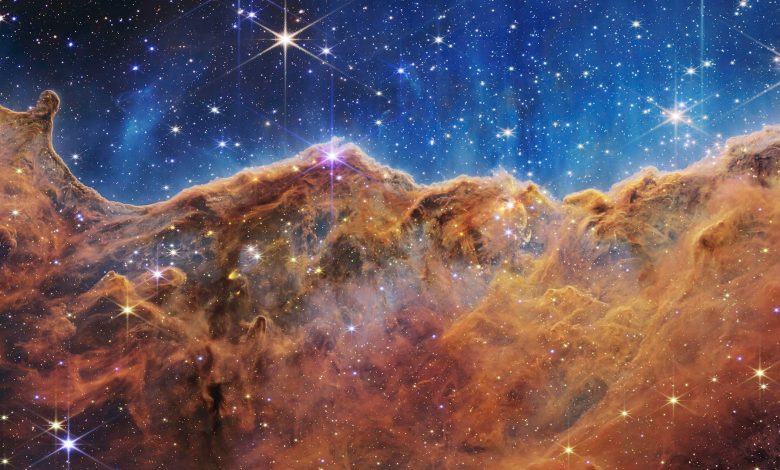
The James Webb Space Telescope (JWST) is celebrating its fourth birthday today, and like PetaPixel did two years ago, it’s the perfect opportunity to look at the 25 best space photos Webb has captured thus far.
The $10 billion NASA/ESA/CSA JWST has produced a great deal of exceptional scientific work in its first four years of operation, much of which is utterly groundbreaking. However, that alone is not enough to warrant a photo’s inclusion. While scientific value is important, a Webb image featured here must also be beautiful.
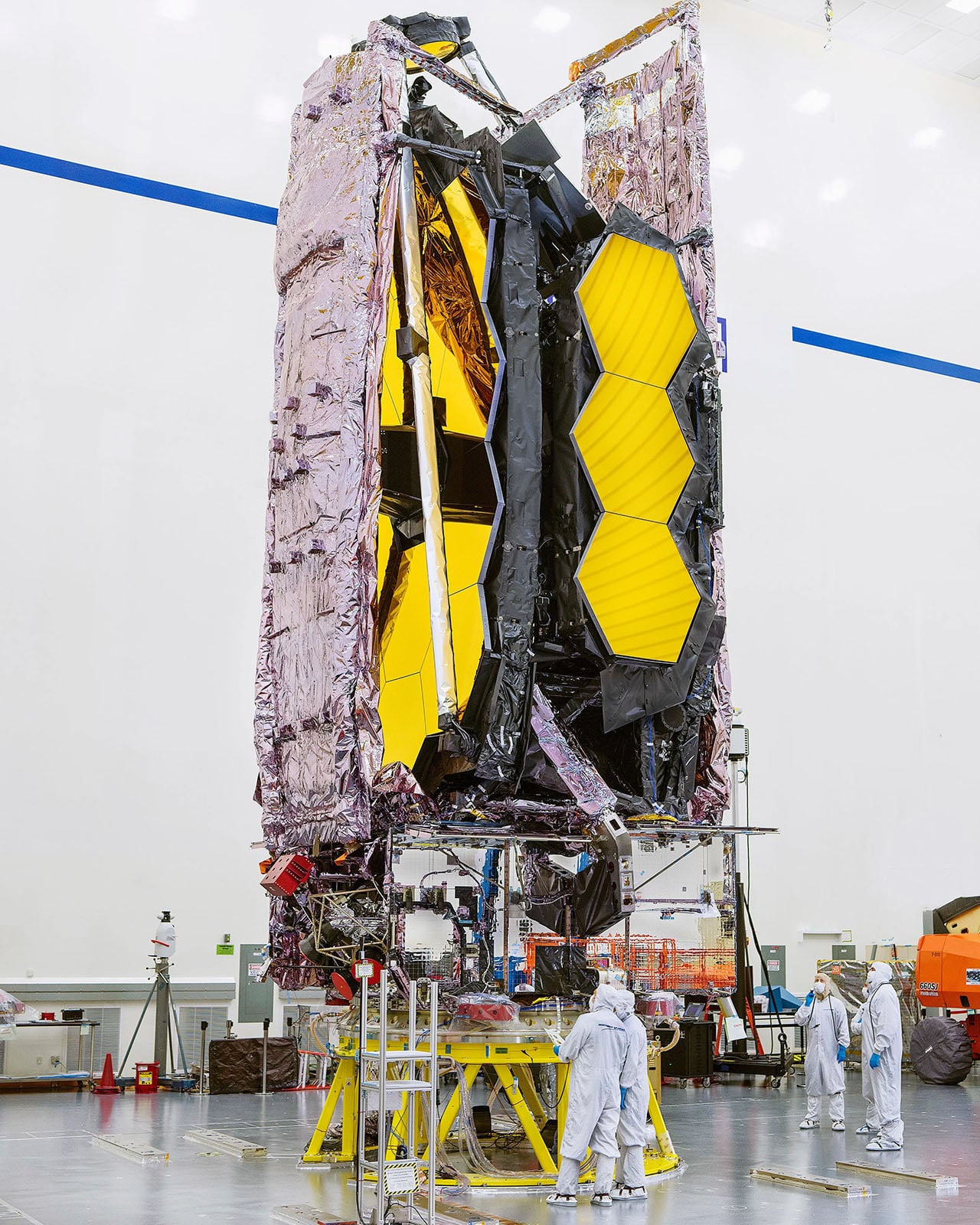
In our view, JWST — and other telescopes, for that matter — is at its very best when art and science intersect. Fortunately, there is no shortage of jaw-dropping space photos from Webb’s first four years of operation that deliver beauty and scientific achievement.
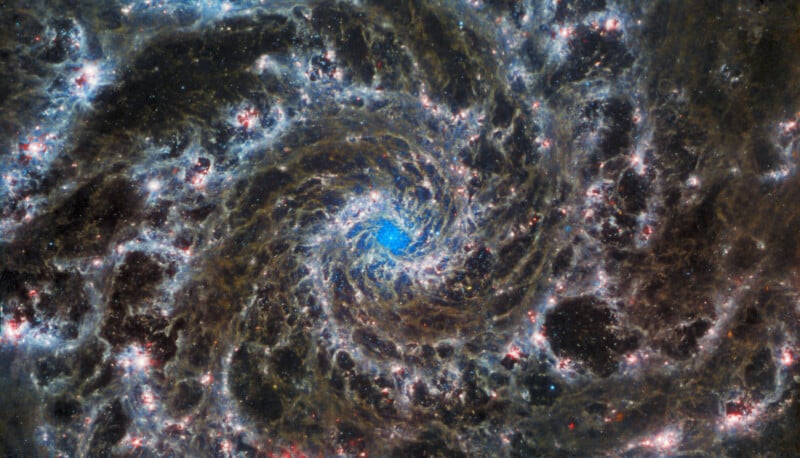
Messier 74 (M74)
Released in August 2022, this image of Messier 74, also known as the Phantom Galaxy, showcases a key aspect of what makes Webb special. Scientists captured this image using Webb’s Mid-InfraRed Instrument (MIRI), which uses mid-infrared wavelengths to peer through interstellar gas and dust, helping scientists uncover never-before-seen details.
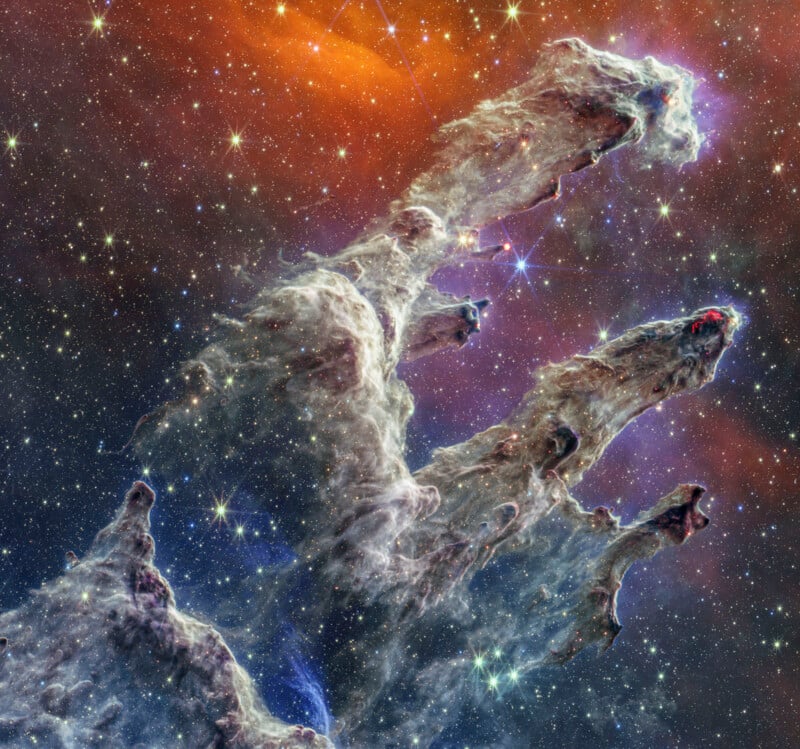
The Pillars of Creation
One of Webb’s greatest abilities is combining images captured at different wavelengths with its various instruments. In the image below of the iconic Pillars of Creation, one of the most famous cosmic structures in the known Universe, scientists combined data from MIRI and Webb’s high-resolution Near-Infrared Camera (NIRCam). The result is a colorful, sharp photo full of galaxies, stars, and wild cosmic detail.
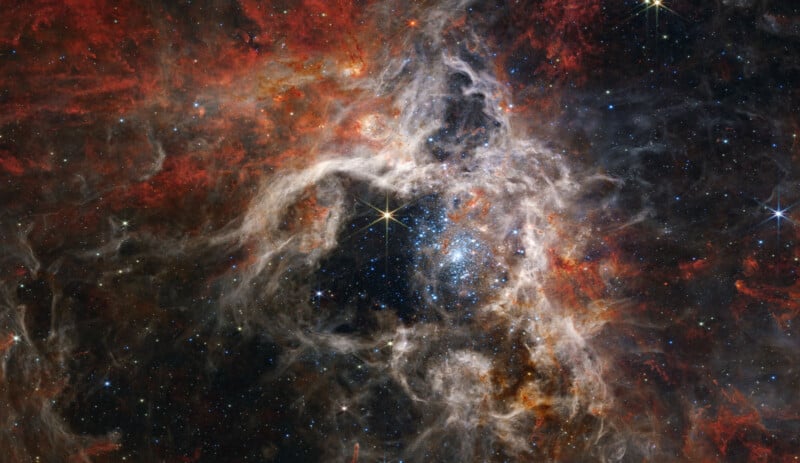
The Tarantula Nebula
The Tarantula Nebula is located 161,000 light-years from Earth and is among the largest and brightest star-forming regions in the Local Group. As such, it is a popular target for astronomers and scientists alike. The Tarantula Nebula has some of the hottest and most massive stars in the entire Universe, making it a stellar laboratory for investigating how stars form.
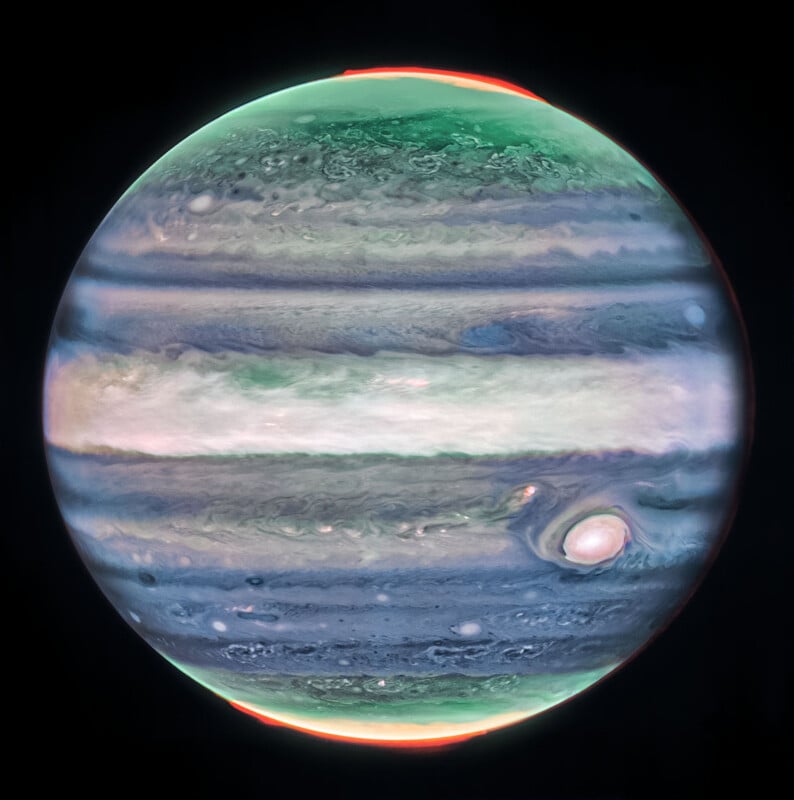
Jupiter
Although JWST is adept at peering far into the cosmos, it can also photograph objects very close to Earth, such as its neighboring planets. The image below shows Jupiter as never seen before, thanks to Webb’s NIRCam. Using Webb’s sophisticated spectroscopic instruments, scientists can study the atmospheres and surfaces of planets in the Solar System and far beyond.
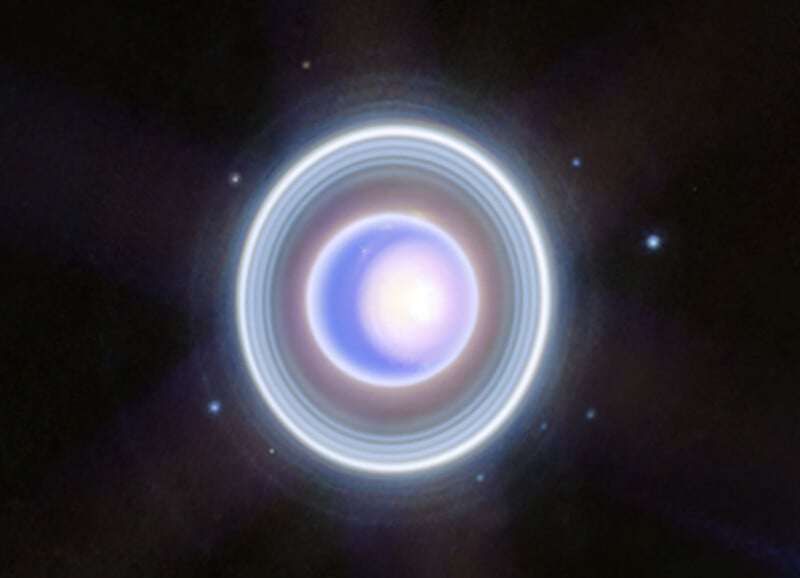
Uranus
Another of Earth’s neighbors, Uranus, got the close-up treatment thanks to Webb’s NIRCam instrument. The image shows Uranus and its rings in stunning new clarity, revealing the planet’s seasonal north polar cap. Webb also resolved nine of Uranus’ 27 moons.
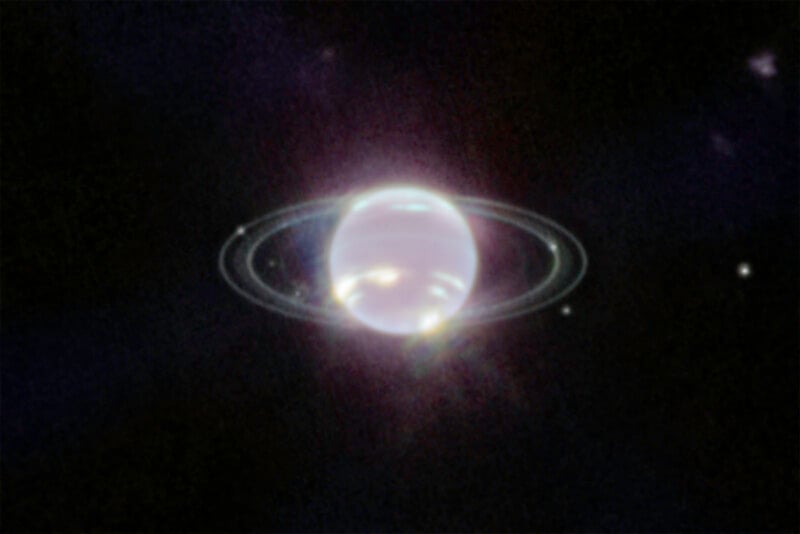
Neptune
Next up is Neptune. Webb’s NIRCam instrument is sensitive enough to show Neptune’s very dim rings, methane ice clouds, and some of its moons.
Saturn
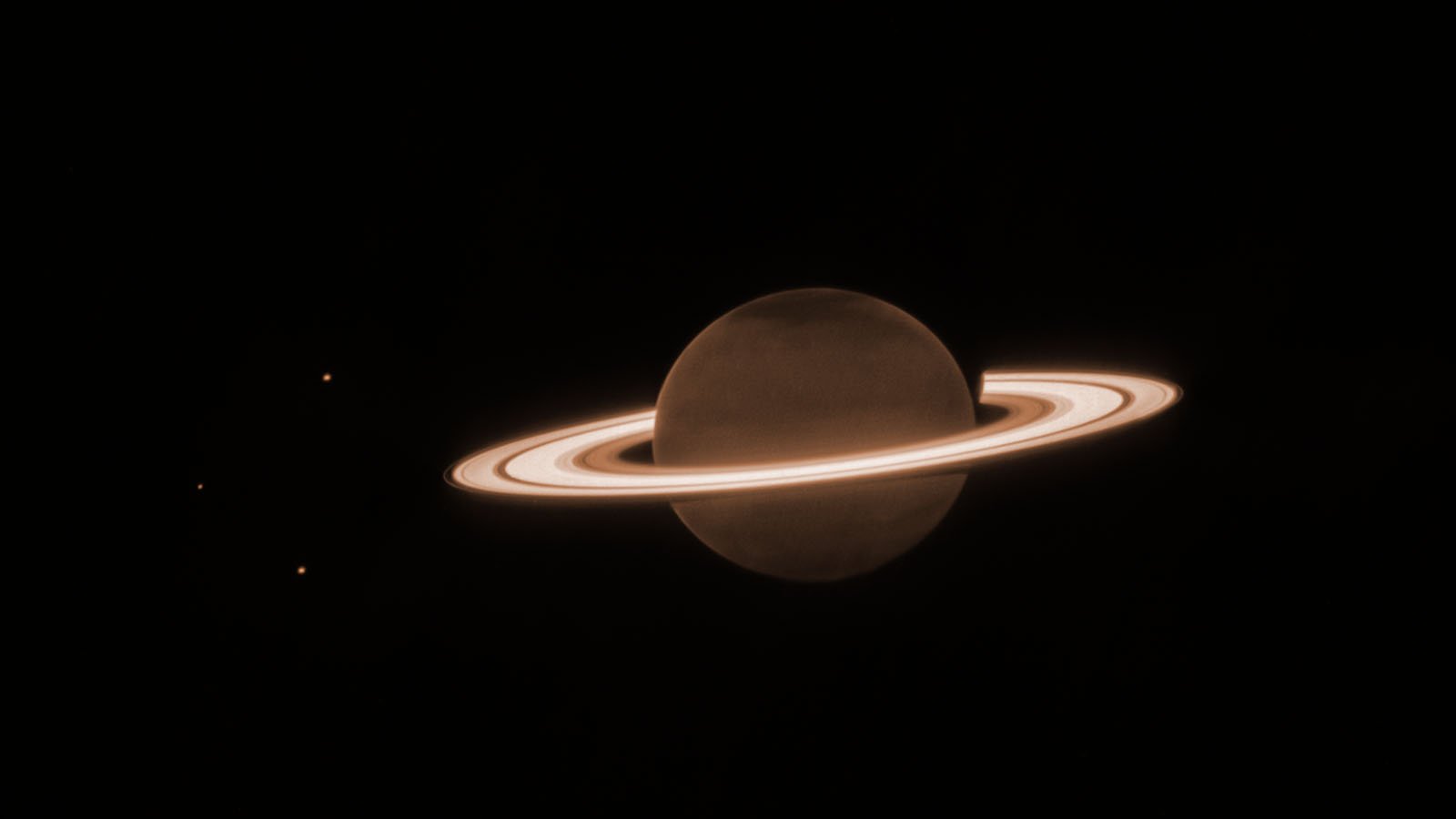
As fantastic as JWST’s planetary portraits above are, its shot of Saturn may be the most impressive of them all. NIRCam captured Saturn’s glowing rings in hauntingly beautiful light. It’s absolutely magnificent.
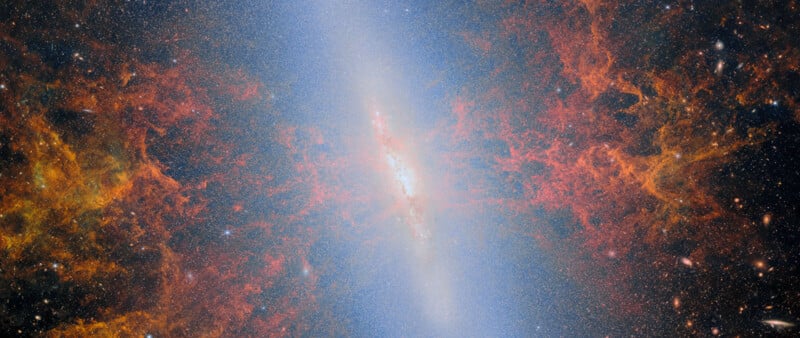
Messier 82 (M82)
Messier 82, also known as the Cigar Galaxy, is just 12 million light-years away. It is, as Webb shows, extremely bright. The Cigar Galaxy is smaller than the Milky Way, but five times as luminous, and it forms new stars at 10 times the Milky Way’s rate. Thanks to Webb’s ability to peer through gas and dust, scientists have been able to study the galaxy’s extremely active galactic center in unprecedented ways.
SMACS 0723
One of the first five full-color photos that the James Webb Space Telescope team shared with the world back in July 2022, this photo is the spiritual successor to Hubble’s famous Deep Field. (https://petapixel.com/2022/07/12/comparing-webbs-first-photos-to-what-hubble-saw/) This image, taken by NIRCam, is a composite of 12.5 hours of exposure time and is the highest-resolution photo ever captured of deep space. Some of the light in this photo traveled more than 13 billion years to reach Webb’s detectors. When considering the sheer scale of what Webb can see, this is perhaps the most beautiful example of all.

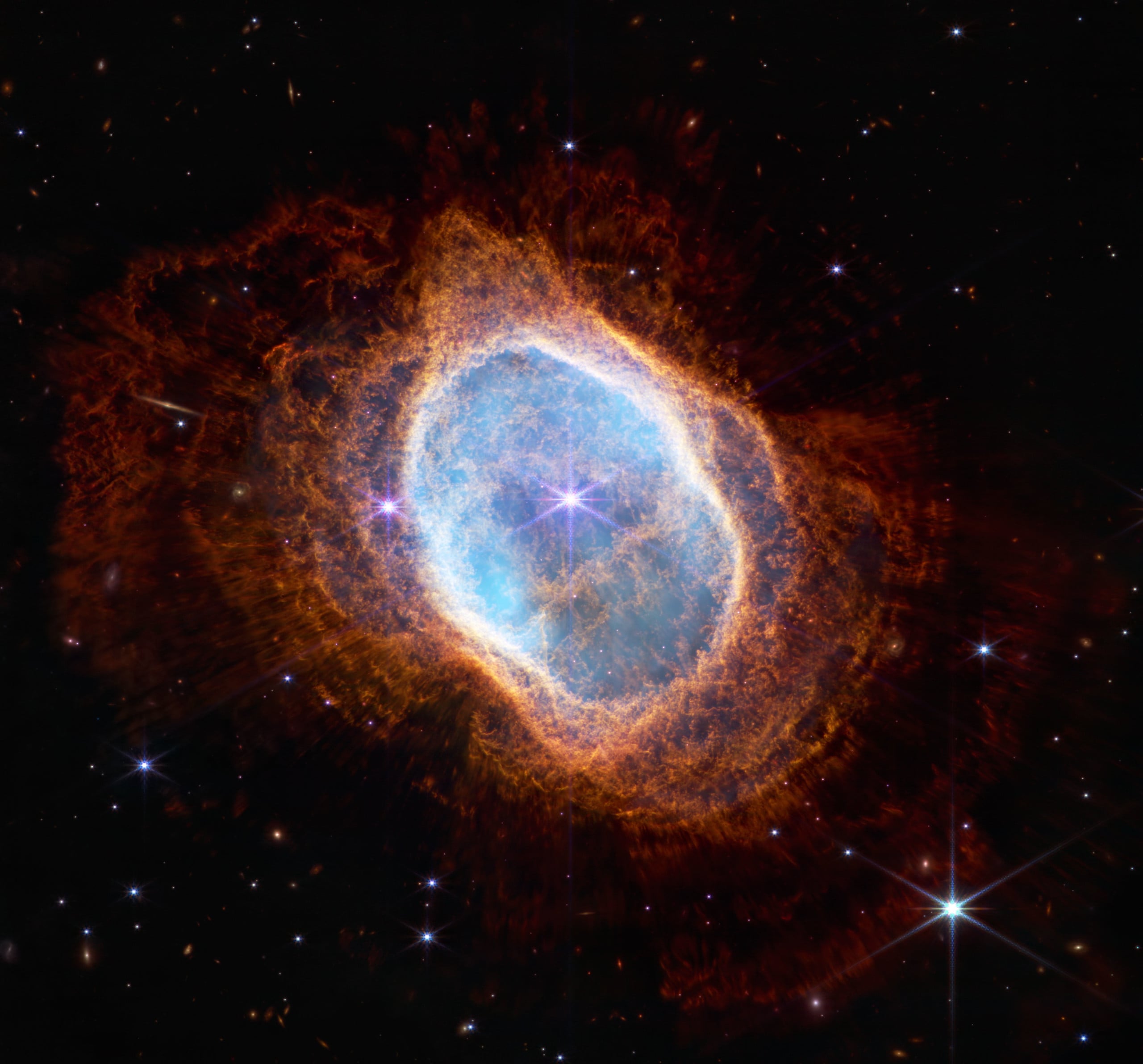
Southern Ring Nebula
Another of JWST’s first images, the Southern Ring Nebula is like peering into a cat’s eye, if a cat’s eye were 0.5 light-years across, of course. This NIRCam image is just absolutely stunning, and so far beyond what space telescopes before JWST could do.
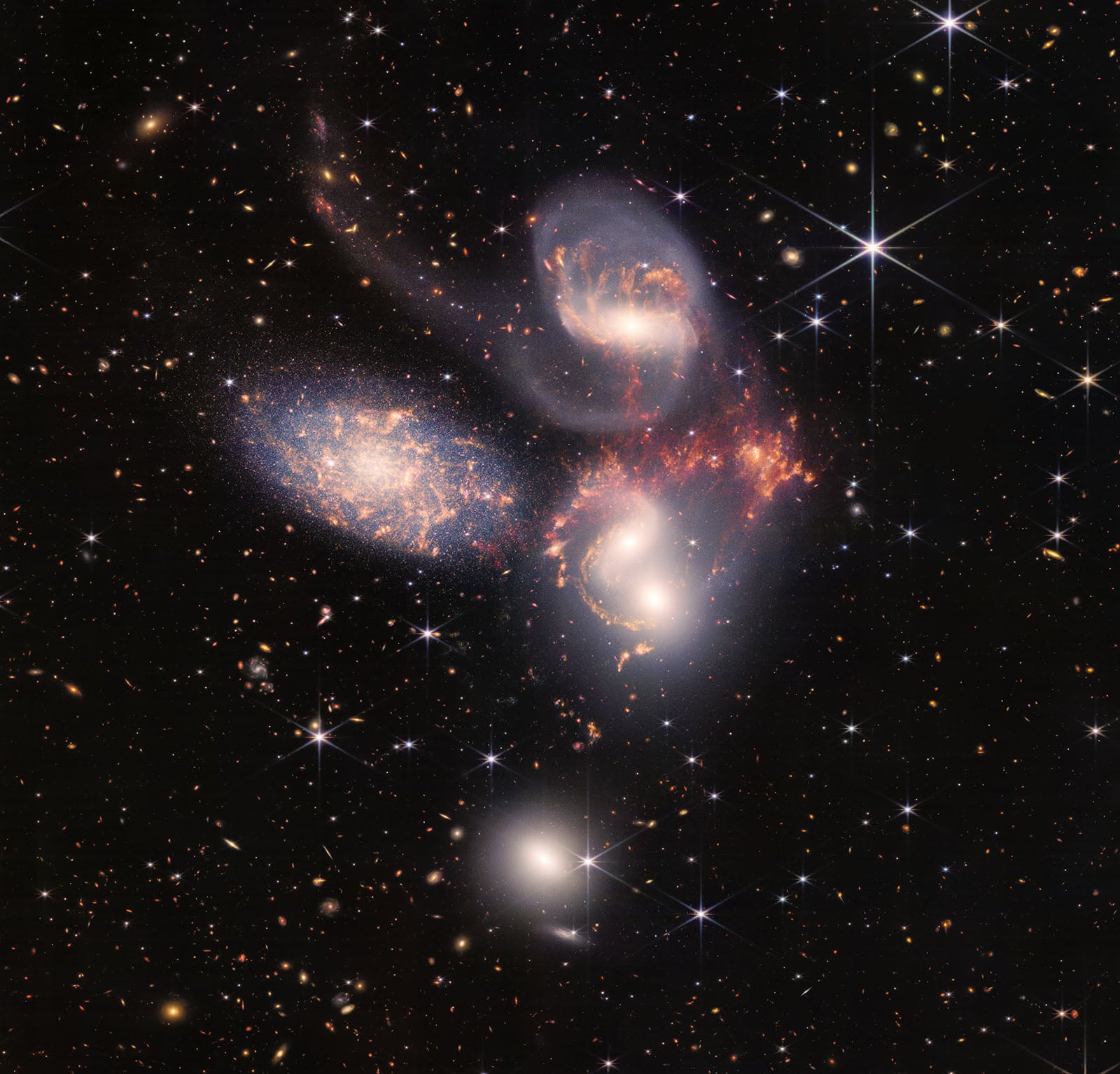
Stephan’s Quintet
At the risk of sounding like a broken record, here’s another shot from Webb’s initial image release. It shouldn’t be too surprising Webb’s first photos were so spectacular, though, as scientists spent a very long time picking their initial targets, knowing how important it is to make a good first impression. The image shows five galaxies located about 290 million light-years from Earth, all locked into a cosmic battle of the wills. They look so small here, but these galaxies are incomprehensibly massive, and it took Webb 1,000 different photos to create this final composite.
Carina Nebula
This is perhaps the most famous of Webb’s first photos. It’s one of the favorites of the STScI image processor, Alyssa Pagan, who worked on it. This area is called the “cosmic cliffs” for a good reason. It’s an oldie but a goodie.

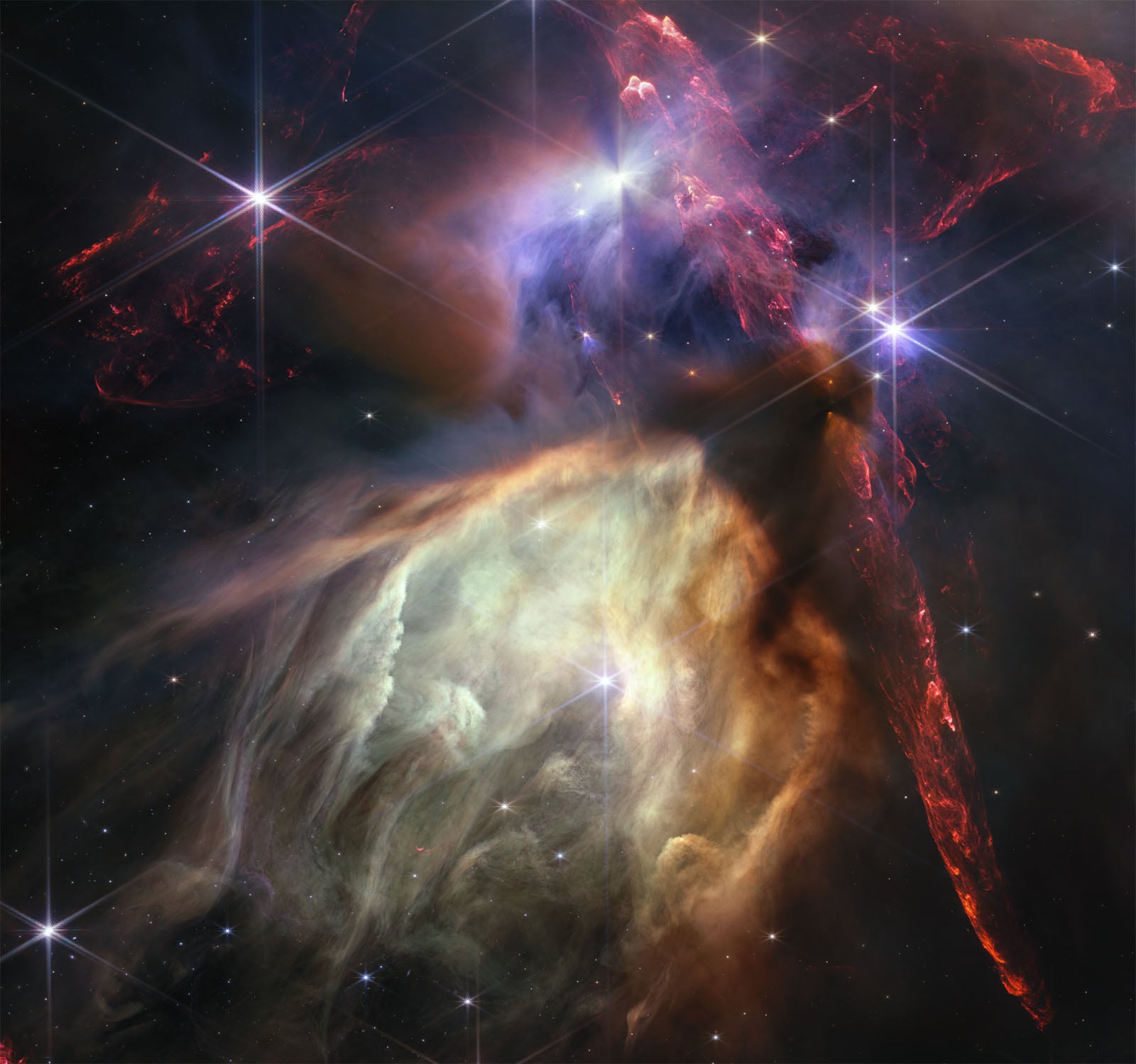
Rho Ophiuchi Cloud Complex
When JWST marked its first birthday, the Webb team celebrated in style with this image of the Rho Ophiuchi cloud complex. This is the closest star-forming region to Earth, and arguably the most beautiful in the Universe.
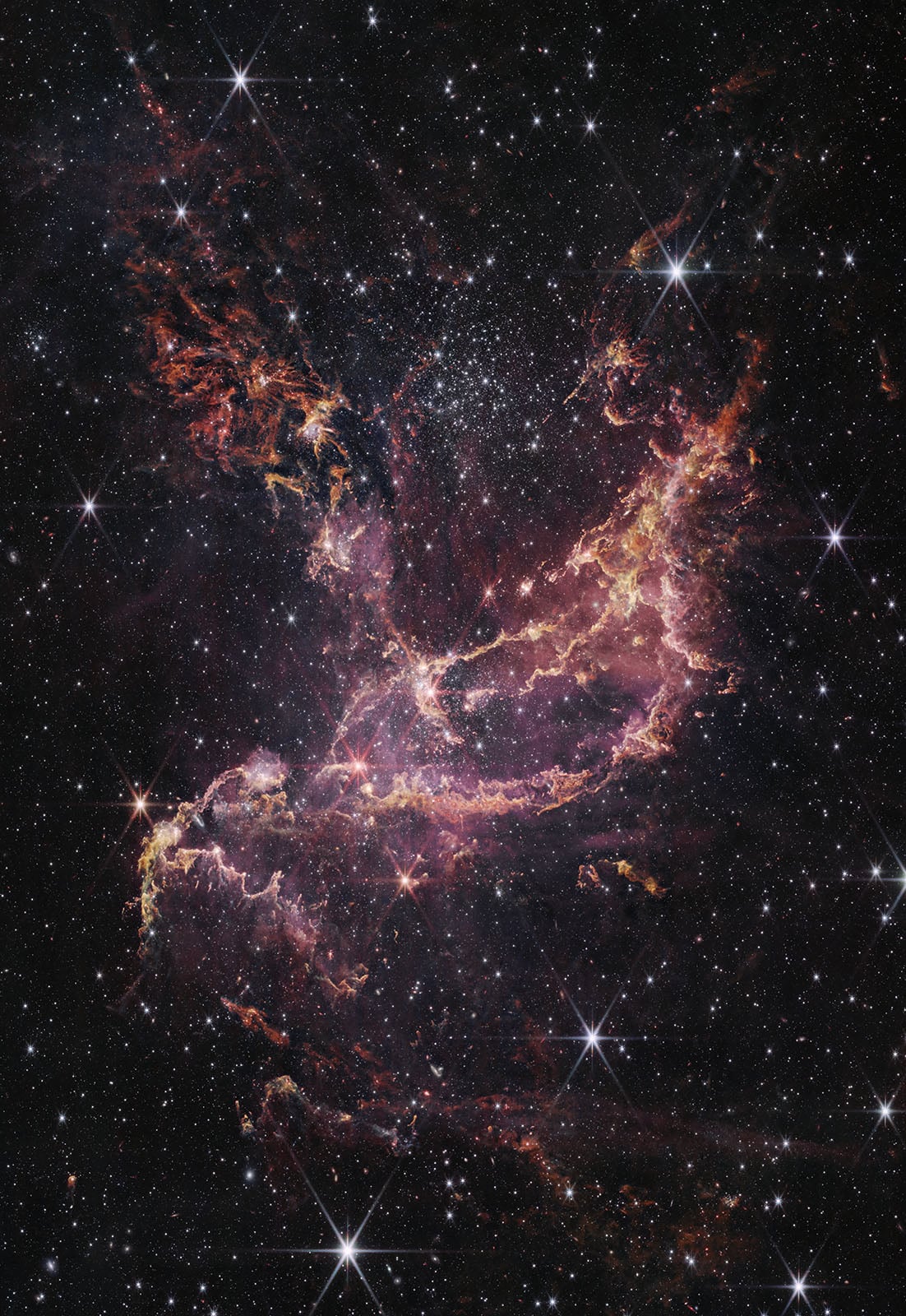
NGC 346
This star cluster is 200,000 light-years from Earth, so scientists are very familiar with it. Or at least they thought they were. JWST’s NIRCam instrument revealed that the star cluster has many more of the building blocks required not only for star formation but also for planets than previously believed. Astronomers really truly put Webb’s resolution to good use.
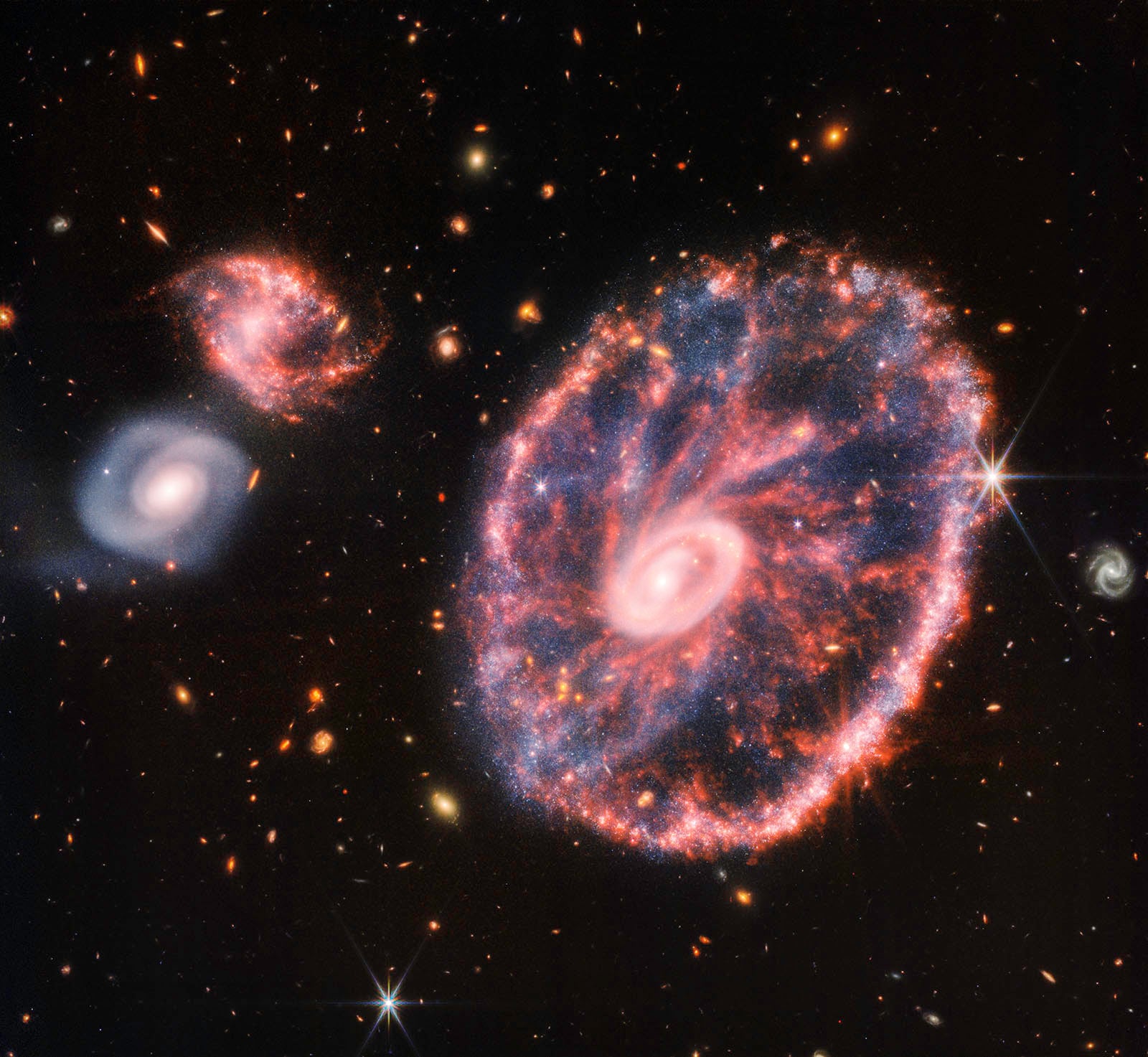
Cartwheel Galaxy
This image looks a lot like the fireworks Americans enjoyed last weekend, but no, this is a galaxy 500 million light-years away. The Cartwheel Galaxy is so stunning because it experienced a high-speed collision a very long time ago, triggering a cascading sequence of events that turned the galaxy into the striking shape seen below.
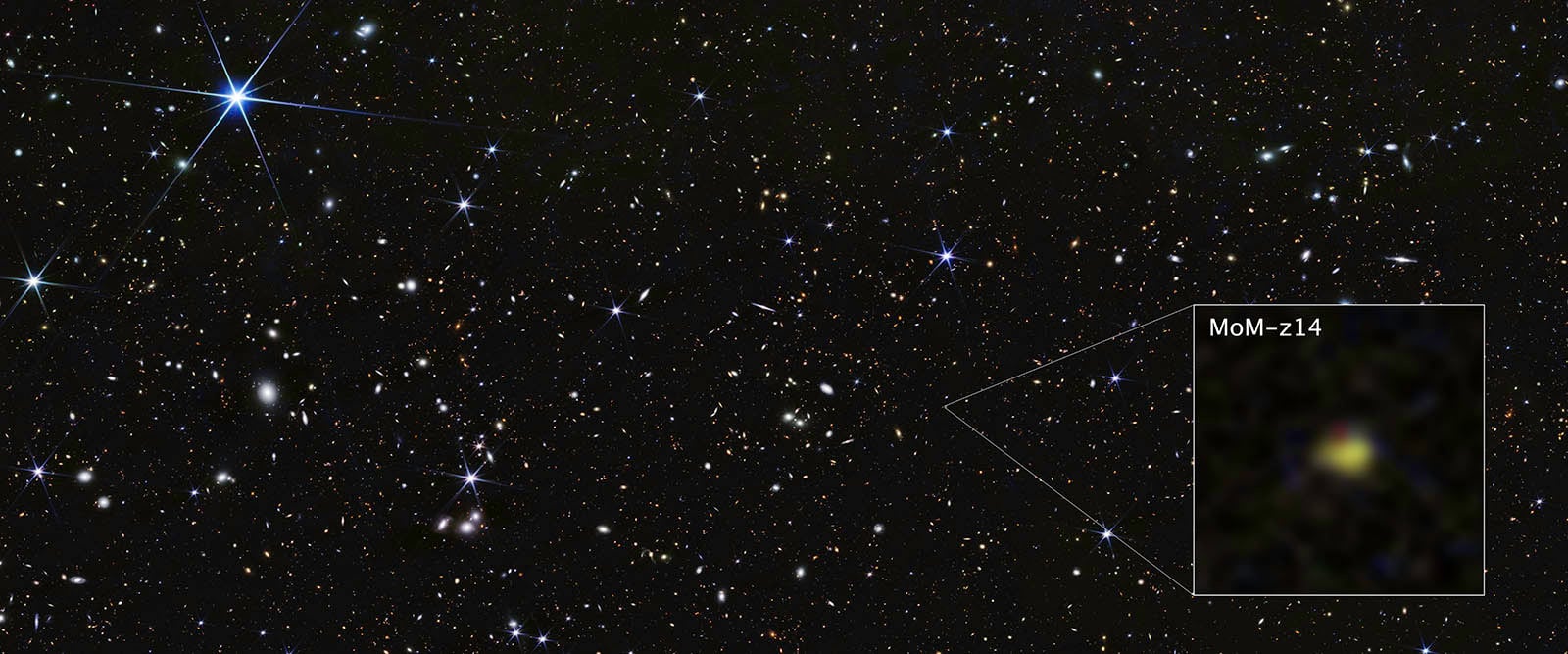
MoM-z14
At first glance, this image looks so basic and bland compared to all the ones above. However, looks can be very deceiving in the case of the James Webb Space Telescope. That tiny, blurry blob, MoM-z14, is the farthest galaxy ever observed. It existed just 280 million years after the Big Bang. While JWST will surely break this record, just as it has broken essentially all its other ones, for now, this is a staggering record and achievement. This galaxy is about 13.5 billion years old. Imagine that.
JADES Program — GOODS-South
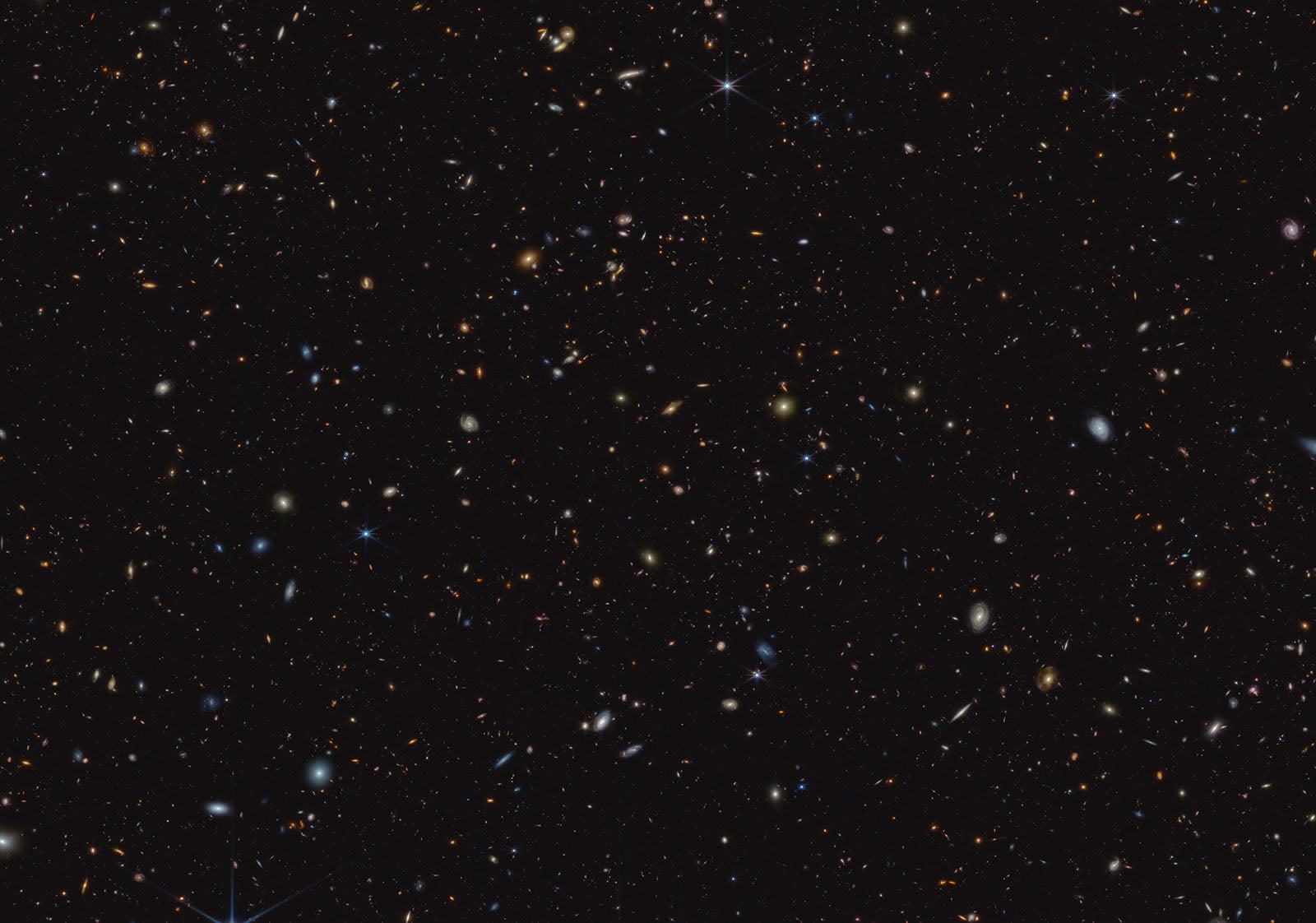
This image, captured as part of the JWST Advanced Deep Extragalactic Survey, or JADES, contains 45,000 individual galaxies. To illustrate the scale of that, consider that the Milky Way galaxy, just a single relatively normal, run-of-the-mill galaxy, has upwards of 400 billion stars and possibly trillions of planets.
NGC 3256
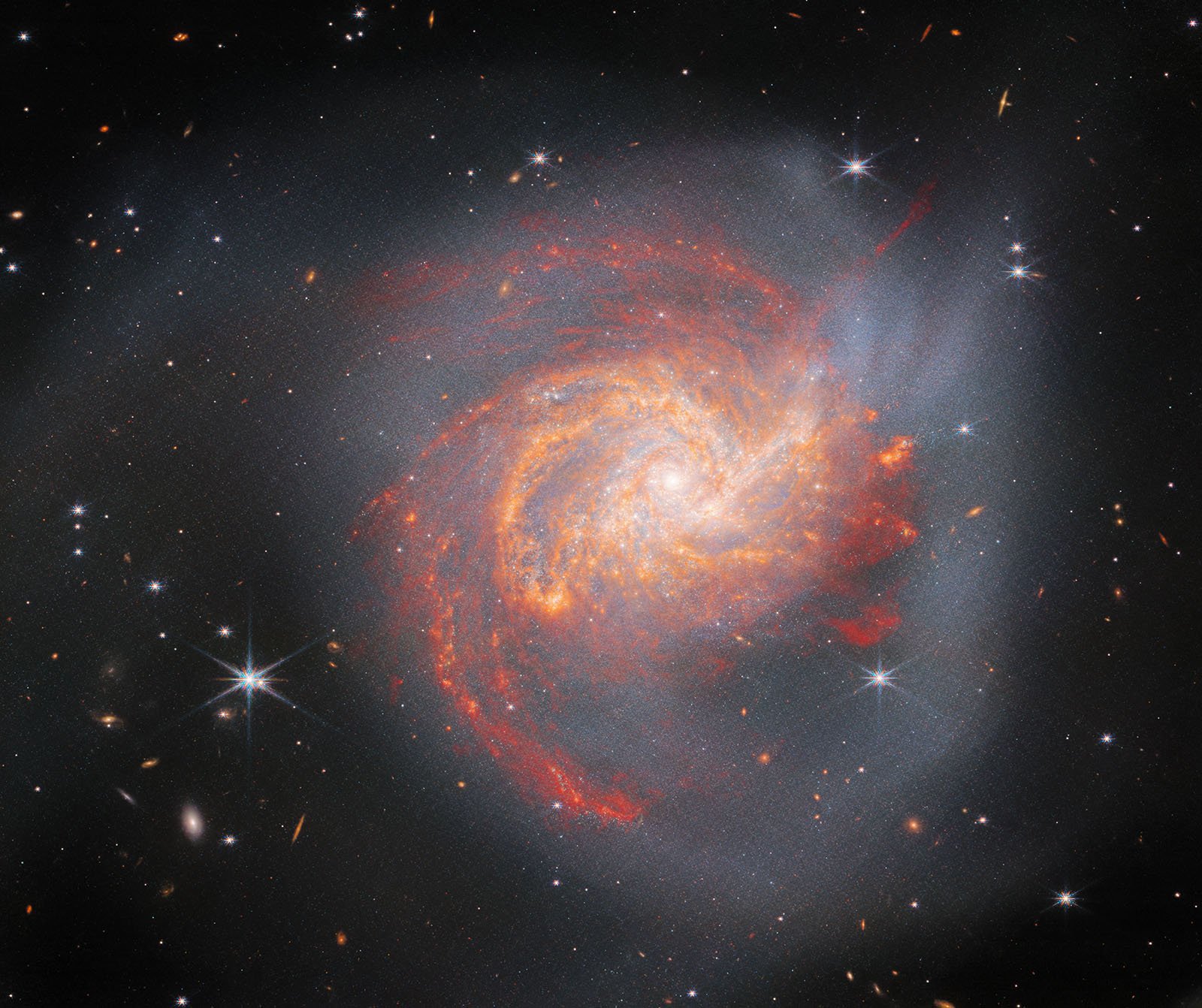
This photo shows NGC 3256, a “peculiar” galaxy located more than 120 million light-years away. The Milky Way-sized galaxy experienced an ancient cosmic clash around 500 million years ago, a bombastic head-on collision between similar spiral galaxies. The resulting galaxy of intertwining arms is certainly beautiful to behold.
The Red Spider Nebula
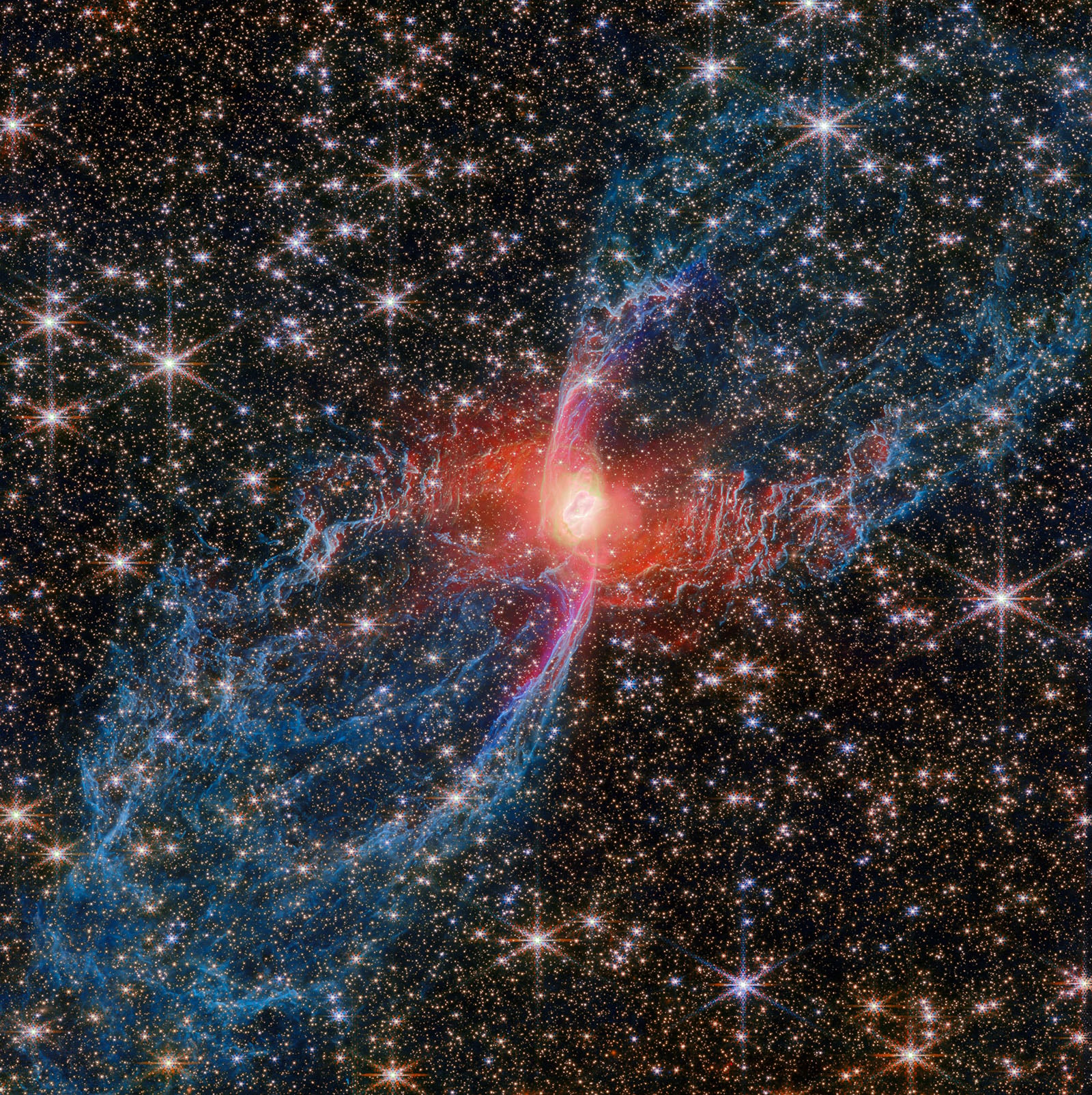
Late last year, Webb caught a cosmic arachnid in the form of the Red Spider Nebula, officially called NGC 6537. It’s a cosmic creepy-crawly that JWST resolved with never-before-seen details. The central star is clearly visible here, glowing ever so slightly brighter than the surrounding dusty gas. In visible light images, like what Hubble captured, the central star looks very different.
Messier 77 (M77)
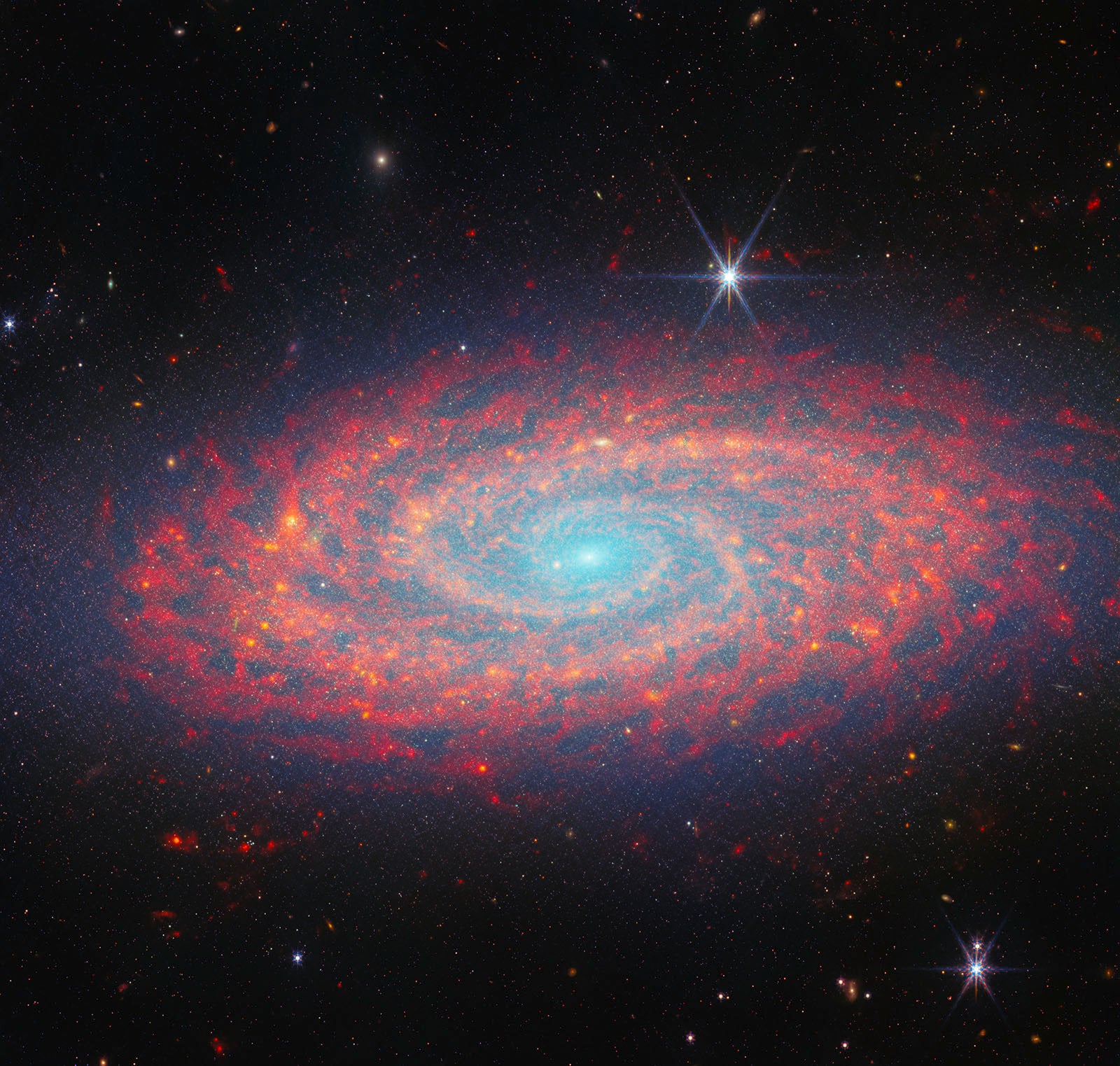
This famous barred spiral galaxy is a popular target for amateur astronomers because it’s only 45 million light-years away. Good luck getting a photo like this from Earth, though, as Webb’s atmosphere-free view and massive mirror enable it to get exceptional close-up photos of objects like M77.
NGC 2090
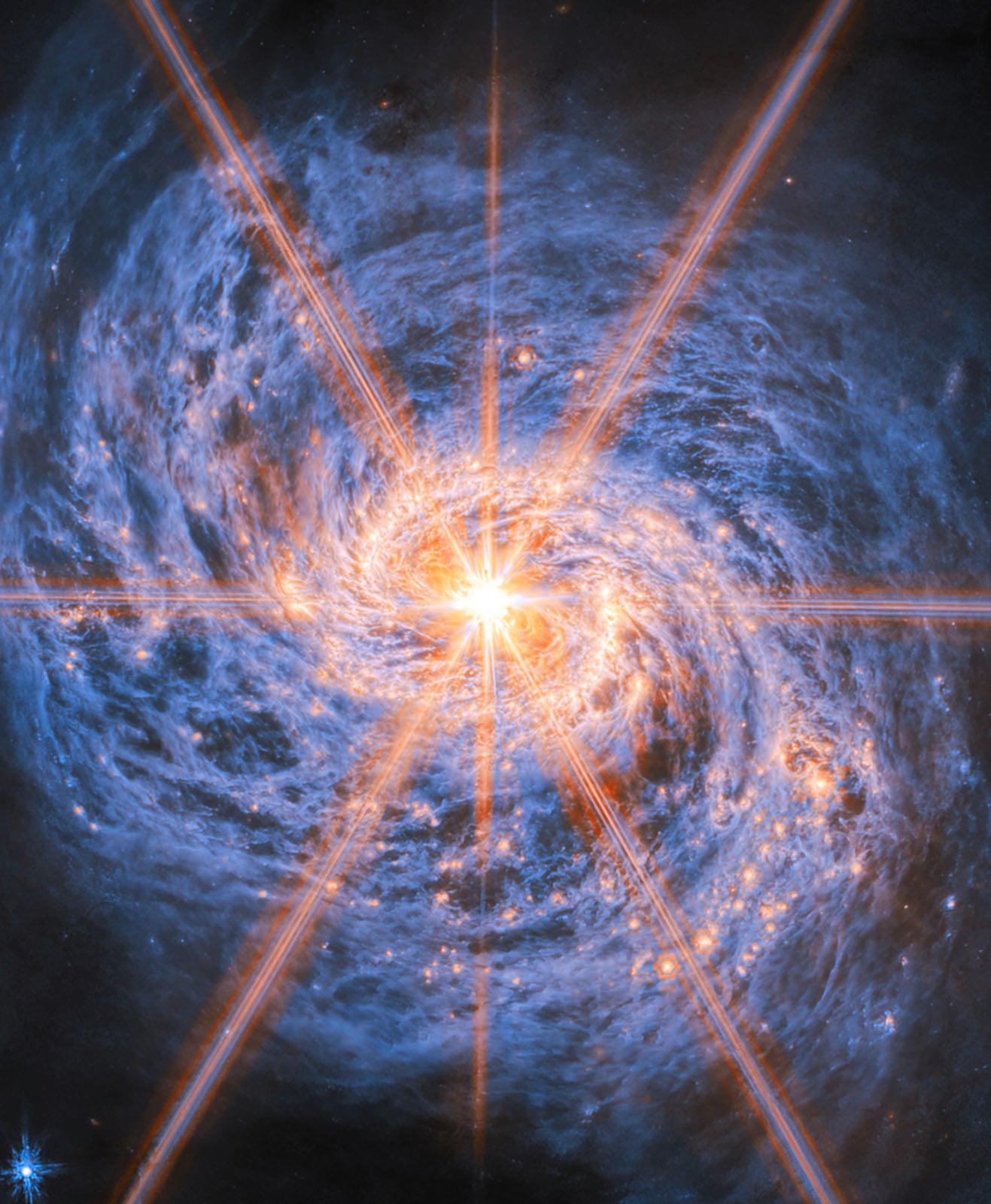
NGC 2090 was one of the Hubble Space Telescope’s earliest targets in the 1990s, and the James Webb Space Telescope had its own look in 2024. This composite combines data from the NIRCam and MIRI instruments, delivering a remarkably beautiful photo of a familiar sight. By the way, because of Webb’s superior instruments, scientists determined that the galaxy is actually 40 million light-years away, not 37 million, as scientists using Hubble believed. Three million light-years might not sound like much, but that’s 1.7635876e+19 miles away. That’s a lot of zeroes Webb resolved.
Westerlund 1
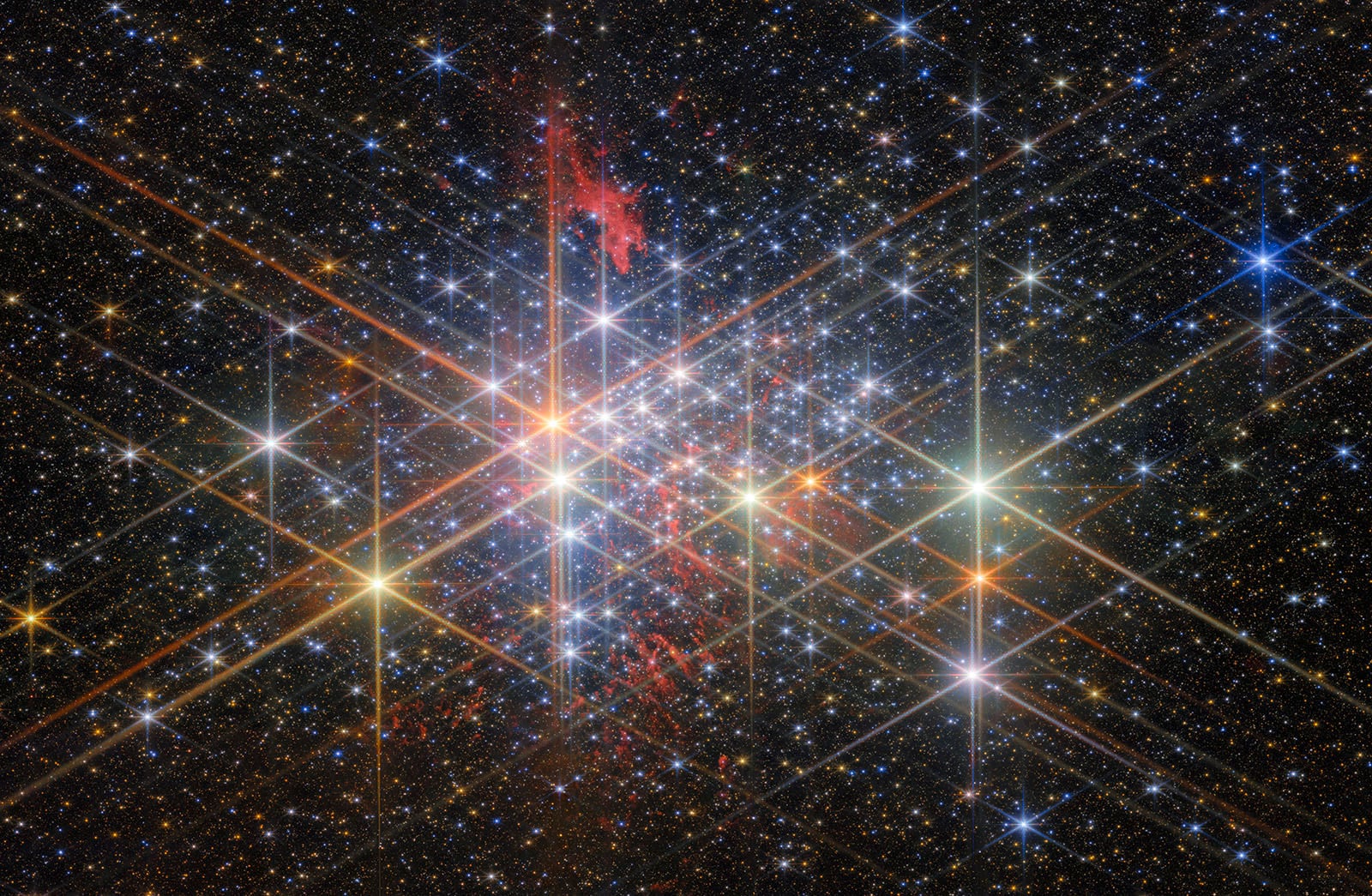
Although the James Webb Space Telescope doesn’t always get to show off its distinctive diffraction pattern, the open cluster Westerlund 1, located 12,000 light-years away, provided plenty of stars for Webb’s spikes. Westerlund 1 is special because of just how many different types of stars it has, and they’re sure to be obvious in this photo.
I Zwicky 18
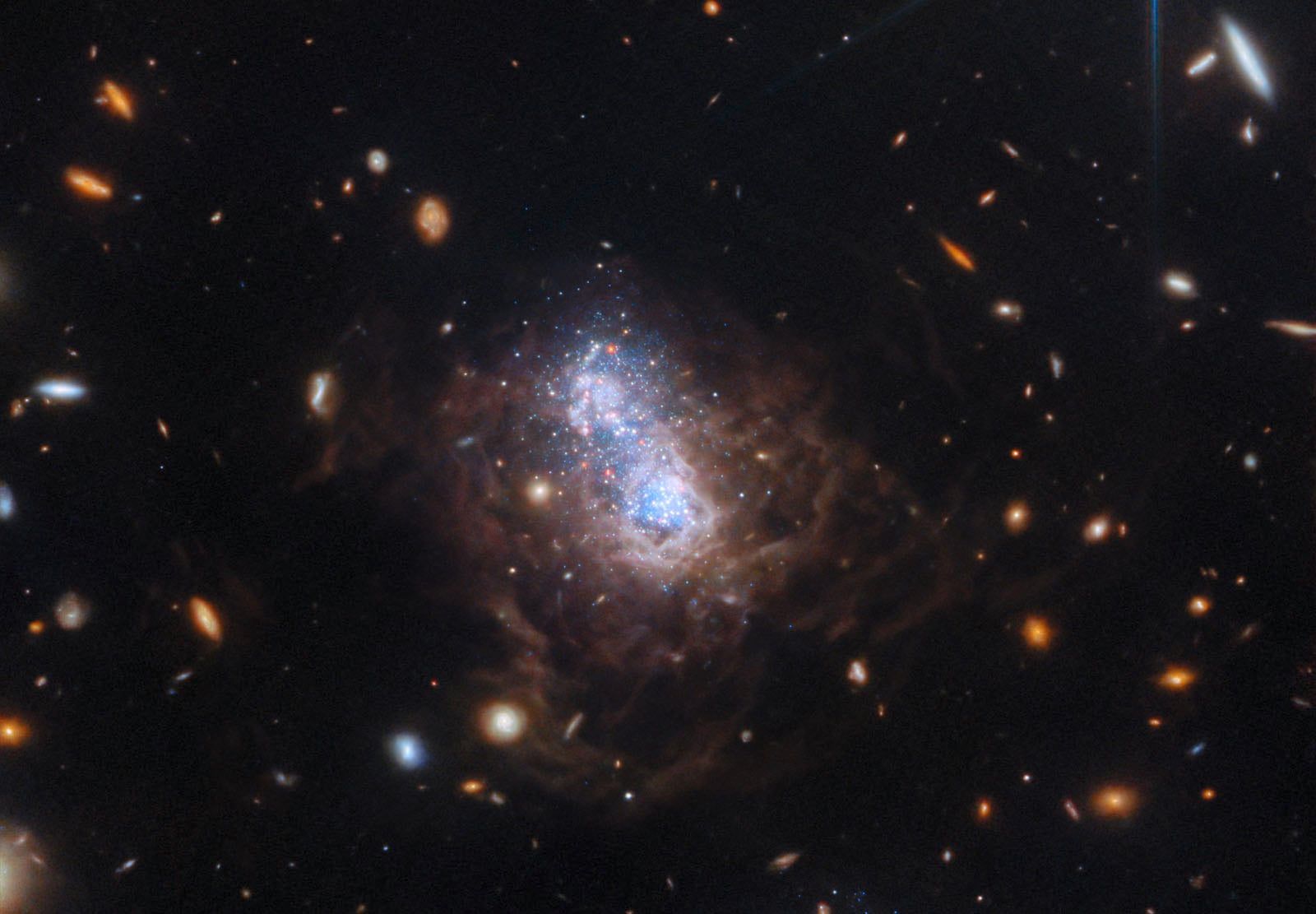
This galaxy was first observed in the 1930s by Swiss astronomer Fritz Zwicky, hence its name. The galaxy has experienced numerous sudden bursts of star formation, resulting in a very pretty, highly unusual space photo. It’s odd to have so many stars in such a relatively small pocket of space, surrounded by a lot of darkness.
NGC 6822
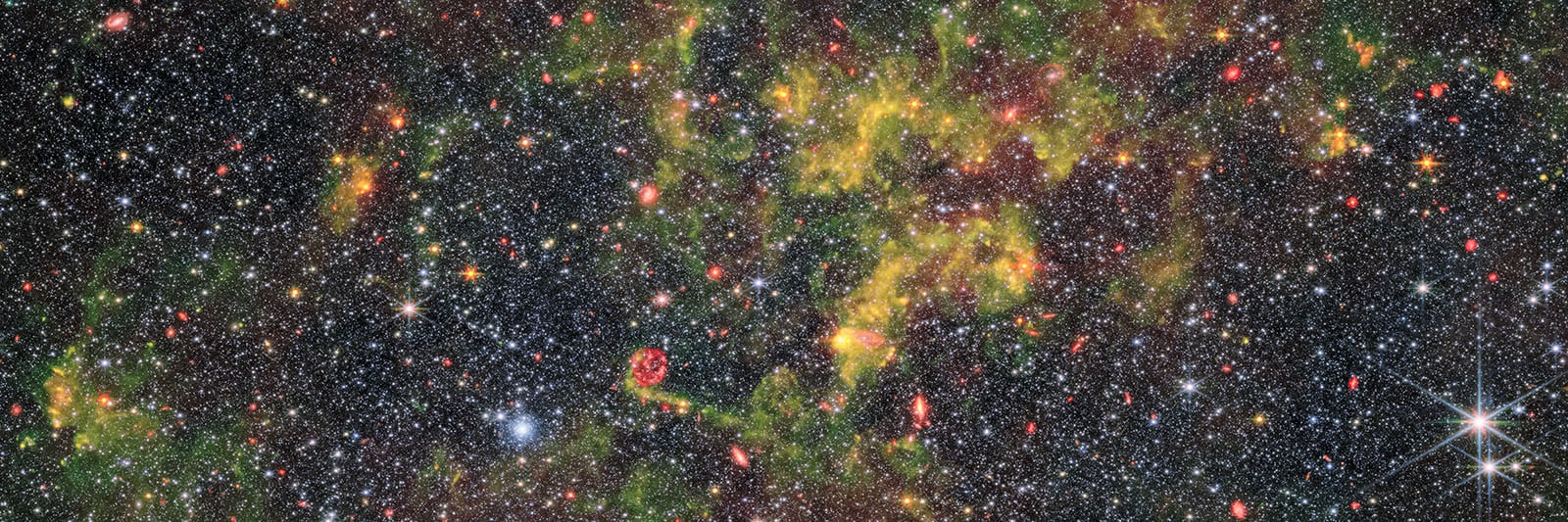
Irregular galaxies are some of the best. JWST’s MIRI and NIRCam instruments captured this photo of NGC 6822, the Milky Way galaxy’s nearest galactic neighbor that is not a satellite galaxy. This galaxy is interesting to scientists because, like many of the very earliest galaxies in the Universe, NGC 6822 has relatively low metallicity, meaning it contains relatively few elements other than hydrogen and helium. Looking at galaxies like NGC 6822 can provide useful insights into the cosmic conditions immediately following the Big Bang.
Galaxy Cluster SDSS J1226+2152
Don’t let this photo’s relative simplicity fool you. This galaxy cluster, SDSS J1226+2152, may not have a catchy name or great, colorful details, but it is one of Webb’s most important photos to date. The importance of this image lies in the physical phenomenon it shows: gravitational lensing. This is the means by which the James Webb Space Telescope can peer billions of years into the past, imaging extremely distant, remarkably dark galaxies. Webb looks past closer galaxies, which are so massive that they distort space-time itself, and magnify the light of background galaxies enough for us to see it. This is a particularly valuable hoard of gravitationally-lensed galaxies that will prove priceless for scientists trying to understand how the Universe was formed and study its fundamental nature. Beautiful? Not at first, but this image’s true beauty is what lies beneath the surface.
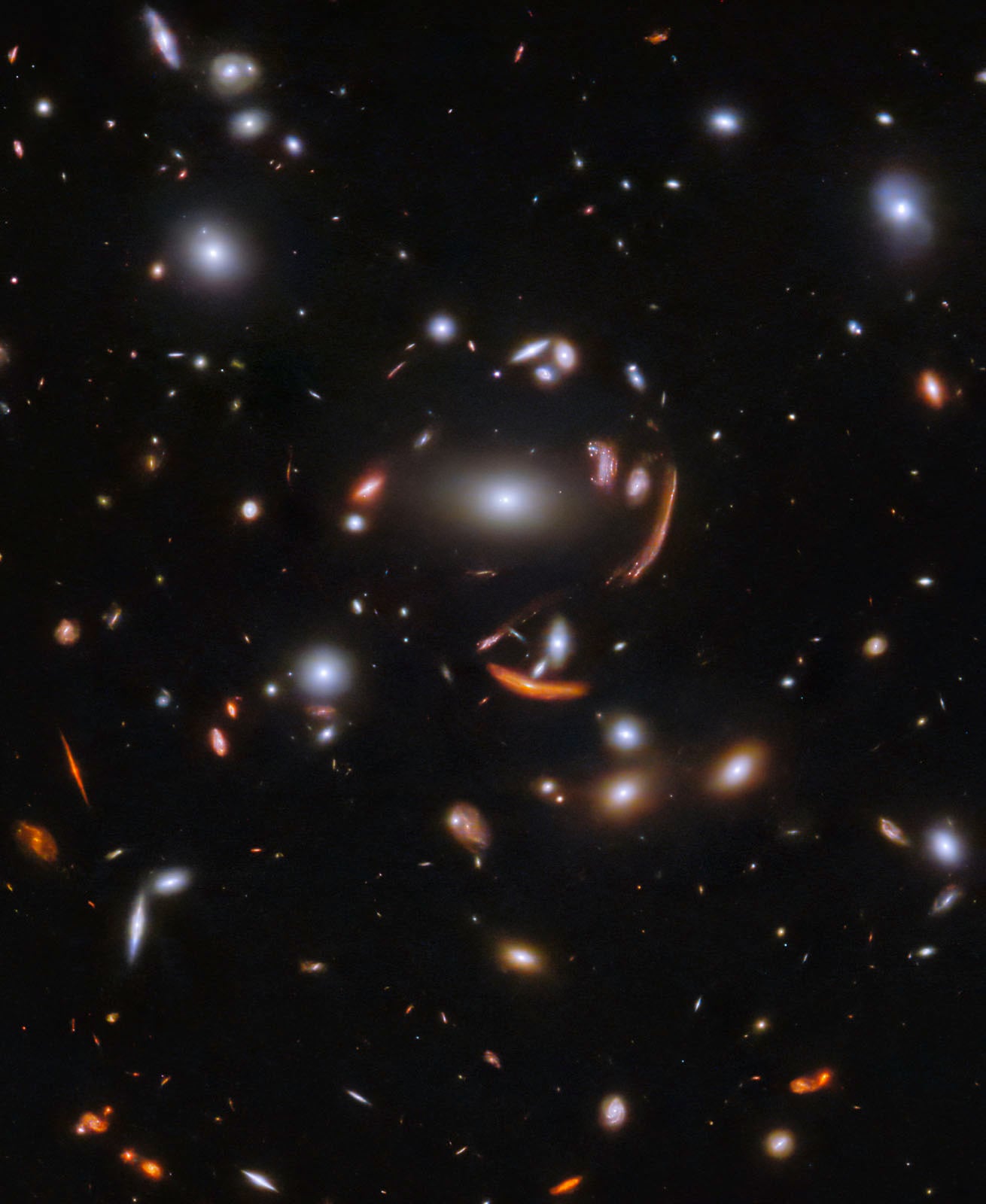
Image creditsNASA, ESA, and CSA. Additional contributions and acknowledgments are included in the individual image captions.